

 English
 русский
 Español
 Deutsch
 عربى
 Français
 Português
Don't hesitate to send a message
Single jacket, EPDM rubber liner Features • 100% high tenacity polyester jacket, high-grade EPDM rub...
Content
An automatic nozzle is one of those pieces of equipment that quietly does a lot of work on the fireground. Instead of asking the nozzle operator to pick a flow and then watch the pump panel, an automatic nozzle uses a spring-loaded baffle to hold a workable nozzle pressure while the flow moves up and down. The stream keeps its shape and its reach even when the water supply is less than ideal. We have been building fire hoses and the fittings that go with them in Taizhou since the 1990s, and in that time one lesson keeps repeating: a line performs well when the nozzle, the hose and the couplings are matched to each other. Below is a practical walk through how automatic nozzles work, where they help, where they fall short, and what to check before you buy.
An automatic nozzle is a combination nozzle, meaning it can produce both a straight stream and a fog pattern, fitted with a movable baffle on a spring. The nozzle is designed around a target nozzle pressure, commonly around 100 psi (roughly 7 bar) for handlines in many markets. When the flow through the nozzle changes, the baffle opens or closes to keep the pressure close to that target.
Flow changes for all sorts of ordinary reasons: another line opens on the same pump, a line is extended up a stairwell, the apparatus is working from a hydrant with modest residual pressure, or the pump operator has to throttle back. With a fixed-flow nozzle, those changes show up immediately in the stream. With an automatic, the nozzle absorbs much of the variation itself and the stream stays presentable.
It is worth being precise about the word "automatic". The nozzle is not choosing a flow rate for you and it is not measuring how much water is available. It is regulating pressure. The flow can rise or fall within the nozzle's design range, and the baffle simply keeps the discharge opening matched to that flow.
The heart of the design is simple. Water pressure pushes the baffle forward against a spring. At low flow, the spring holds the baffle closer to the seat so the discharge opening is small and the pressure stays up. As flow increases, the extra force pushes the baffle back, enlarging the opening and letting more water through without the pressure climbing sharply. The spring rate and the shape of the baffle and seat determine the flow range and how flat the pressure curve is across that range.
Most automatic nozzles include a flush position that opens the passage wide enough to clear sand, grit and small debris picked up from a static source. It is a feature worth testing on the day you receive the nozzle, not on the day you need it.
Because the nozzle holds pressure rather than flow, the reaction force at the tip still varies. A crew that opens up on a fully supplied automatic will feel more kick than one running the same nozzle at a lower flow. Crew size and footing should be part of the selection conversation, particularly on larger attack lines.
Selectable-flow nozzles let the operator choose a preset flow, usually by rotating a ring or collar, and then the pump operator must deliver enough pressure to support that setting. Both types are in daily service, and neither is universally better. The difference is where the workload and the feedback sit.
| Aspect | Automatic nozzle | Selectable-flow nozzle |
|---|---|---|
| Flow setting | Self-adjusting across a design range | Chosen by the operator from preset values |
| Nozzle pressure | Held near target by the spring baffle | Set by the pump operator |
| Stream at low supply | Looks good even when flow is modest | Degrades visibly, giving a clear warning |
| Operator workload | Lower, fewer corrections during the fire | Higher, requires discipline and communication |
| Feedback on water supply | Weaker | Stronger |
| Maintenance | More moving parts: spring, seals, baffle | Simpler internals |
| Typical use | Attack lines, standpipes, variable supply | Crews with strong pump discipline |
The most common criticism of automatics is fair: a good-looking stream can hide a thin water supply. If a pump is only delivering 90 gpm to a line rated well above that, the nozzle will still shape the water nicely. Departments that run automatics usually pair them with flow meters, disciplined pump charts and regular flow testing so the stream is not the only indicator of performance.
In our experience supplying hoses and nozzles to fire services, contractors and industrial buyers, automatics tend to make the most sense in these situations:
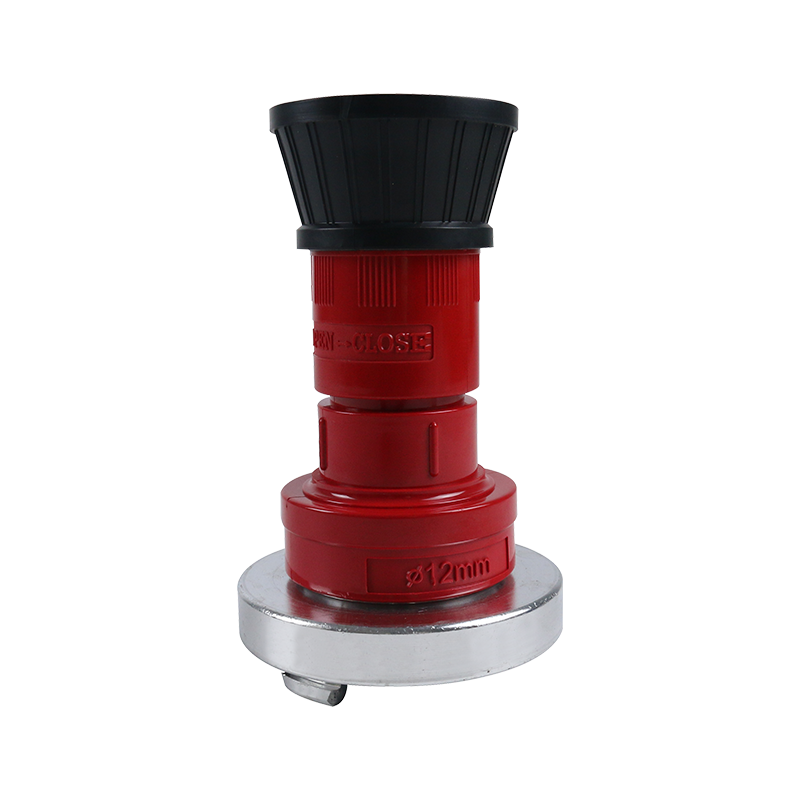 REEL Adjustable Garden Hose NozzleFor garden watering and cleaning, this adjustable nozzle offers multiple spray settings and a standard-hose connector.View Product → is a good example of that application.
A nozzle is only as good as the plumbing behind it. Inlet size and thread must match the couplings on the line, and the hose itself sets the friction loss the pump has to overcome. A 38 mm (1½ inch) attack line and a 65 mm (2½ inch) supply line behave very differently, and a nozzle that is oversized for the hose will simply never reach its rated flow.
Lining material matters too. Rubber-lined hoses built with EPDM, NBR or natural rubber hold their bore well under pressure and are forgiving of rough handling, while TPU and PVC constructions are lighter and easier to repack. The pressure behaviour of these constructions is covered in more detail in our note on how fire hoses maintain their pressure during firefighting operations, which is useful background before you settle on a nozzle flow range.
For general-purpose handline work, a pistol-grip combination nozzle is the usual starting point, and the 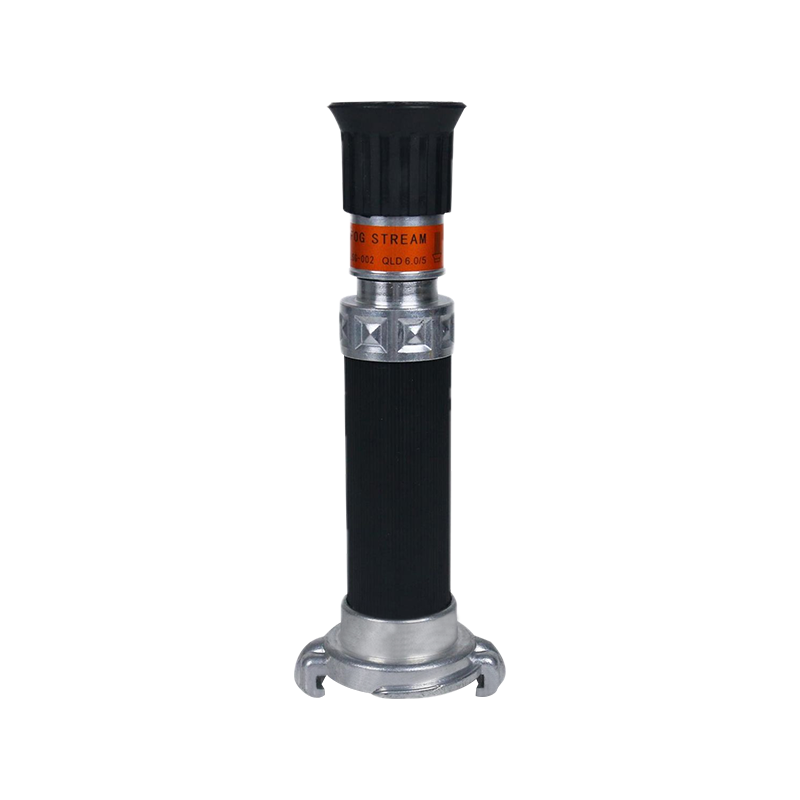 Pistol Grip Fire Multi-Purpose Hose NozzleA lightweight aluminum combination nozzle for general handline work, available in multiple inlet sizes and common connector standards.View Product → covers straight stream, fog and shut-off in one body with a comfortable grip for a single operator.
Before ordering, walk through these points. They prevent most of the mismatches we see:
A Storz-threaded example with multiple inlet sizes is the 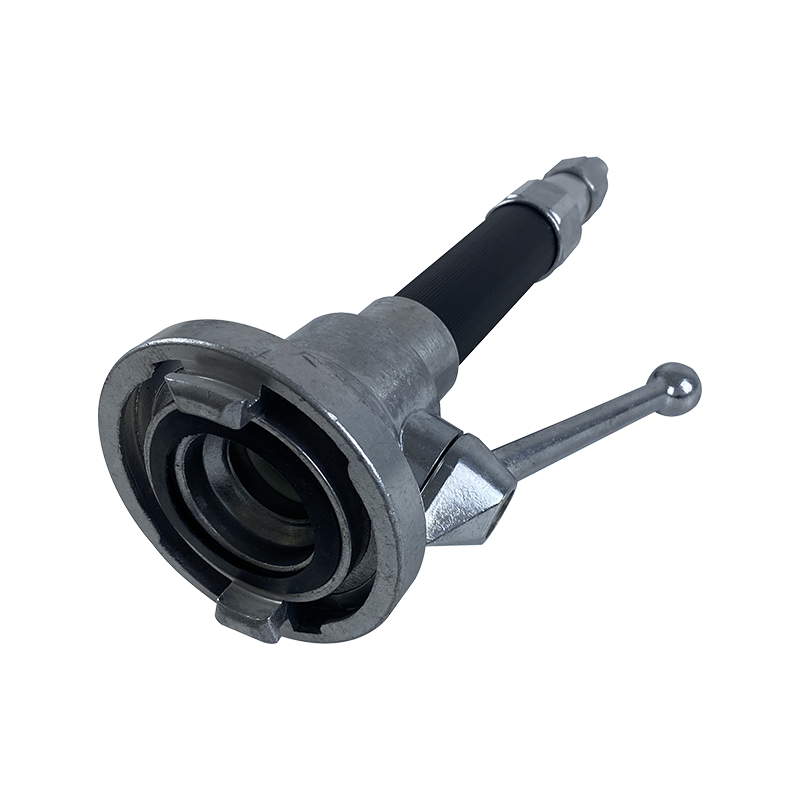 STORZ Hose Nozzles with Multiple Inlet SizesA Storz-threaded nozzle range in 1.5–3 inch inlets, using aluminum alloy, hard plastic and brass fittings for industrial and firefighting duty.View Product →, which suits services standardised on that coupling system.
Automatic nozzles reward a little routine attention. Flush the nozzle after every use from a static source, especially if you have drafted from open water. Open the baffle by hand and check that it moves freely and returns cleanly. Inspect the spring for corrosion or set, and replace it when the stream stops holding pressure at the flows you expect. Keep the threads clean and lightly lubricated, and check the coupling washer at the same time, since a worn washer will cost you more pressure than most people realise. Store nozzles out of direct sun and away from solvent vapours, and include them in your annual flow test so the numbers on paper still match the water on the ground.
Automatic nozzles are not a shortcut around good pump operation, but they are a genuinely useful tool when the water supply is unpredictable and the crew on the line needs a stream that holds together. Since we build hoses, couplings and nozzles under one roof, matching a nozzle to a specific hose construction is straightforward for us, and we are always happy to talk through inlet threads, flow ranges and pressure targets with your team. If you would like to see how the pieces fit together, take a look at our fire hose and accessory range or send us the details of the lines you run.
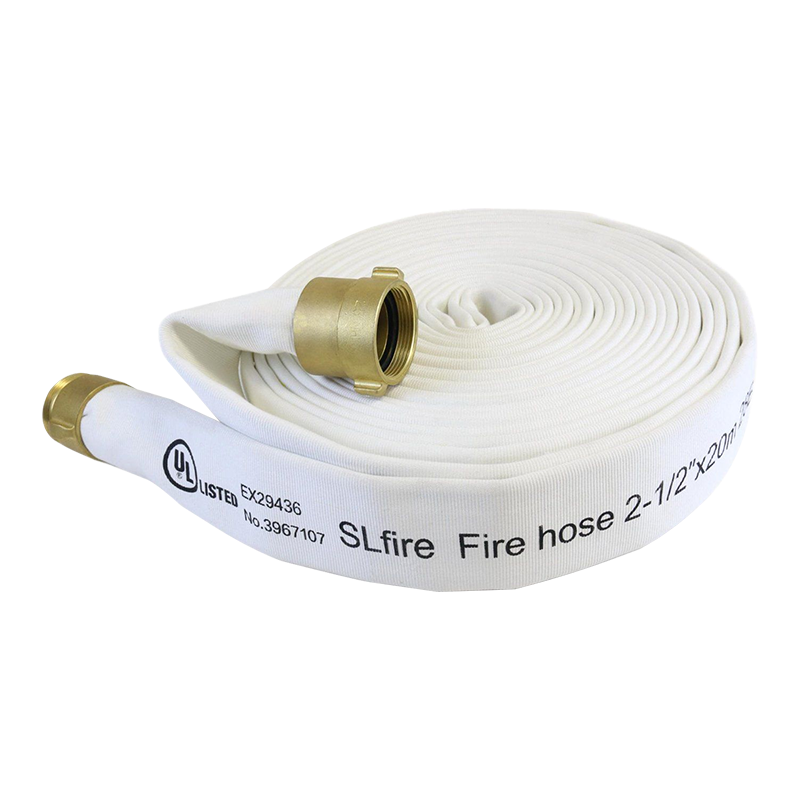
Single jacket, EPDM rubber liner Features • 100% high tenacity polyester jacket, high-grade EPDM rub...
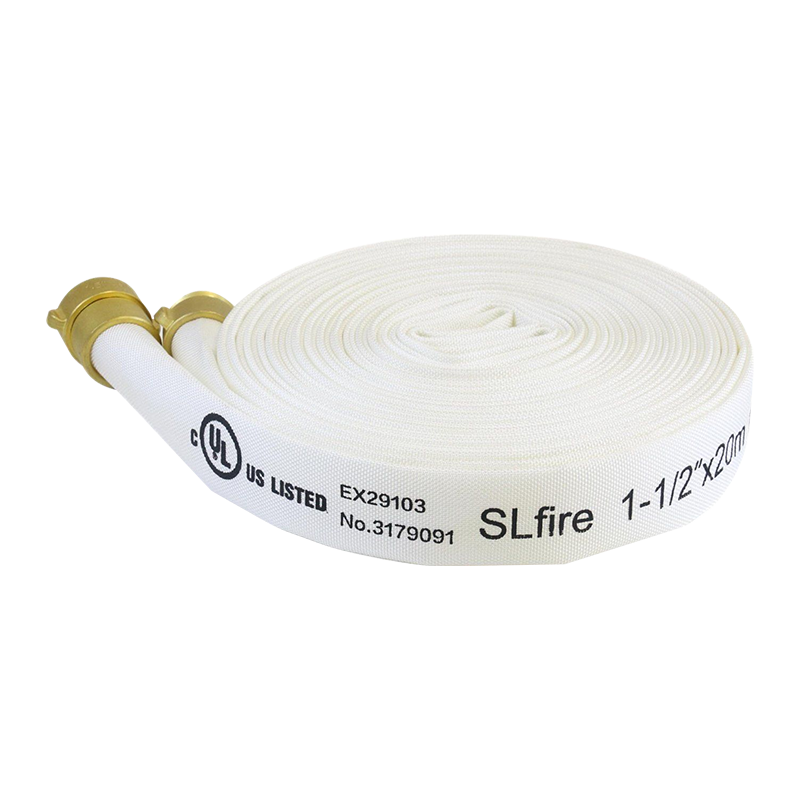
Single jacket, TPU liner •High-tenacity polyester yarn, circular woven in twill weave/plain weave,T ...
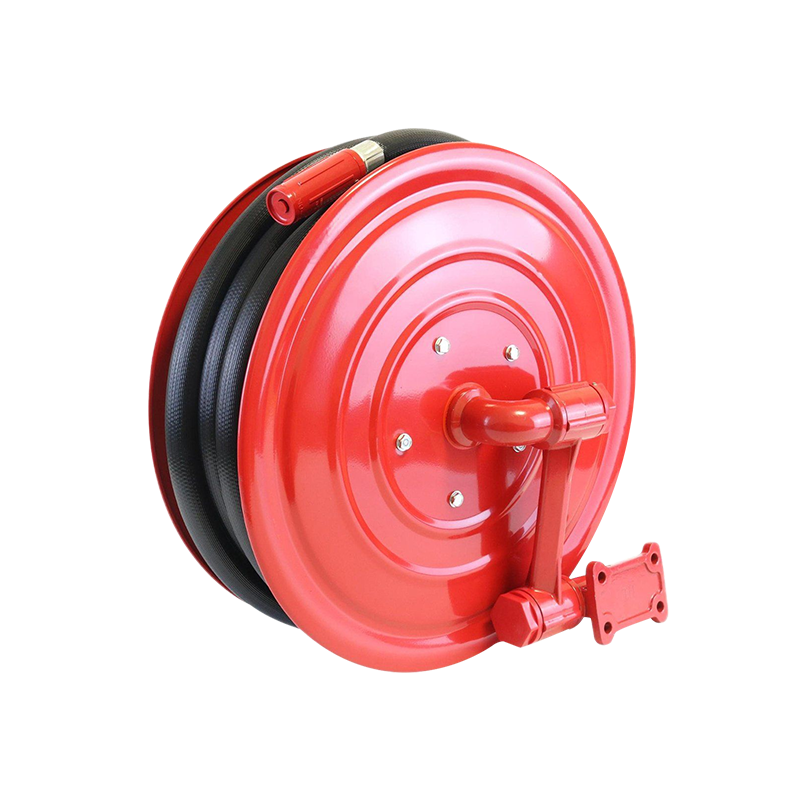
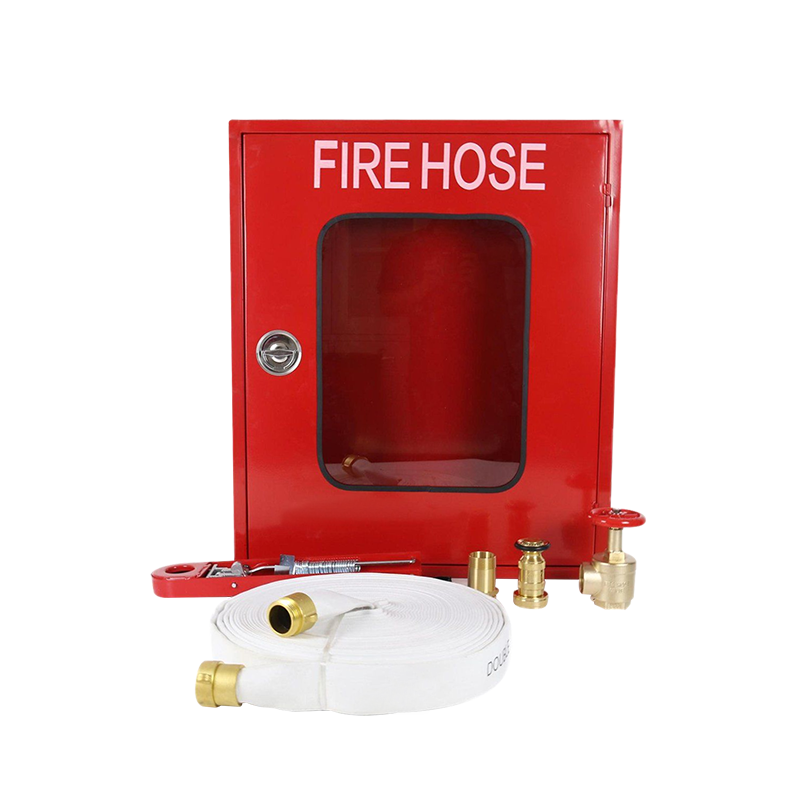
Fire cabinets are designed to accommodate fire hose,valve and other firefighting equipment. Type 201...
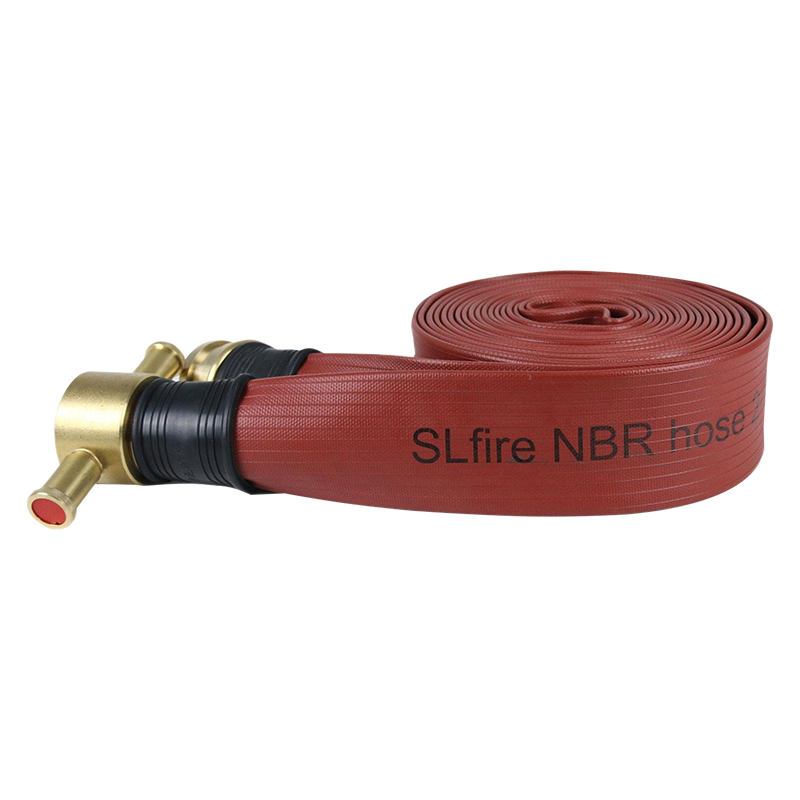
Nitrile covered hose •Nitrile/TPR blend as cover and lining, with 100% high-tenacity polyester yarn ...
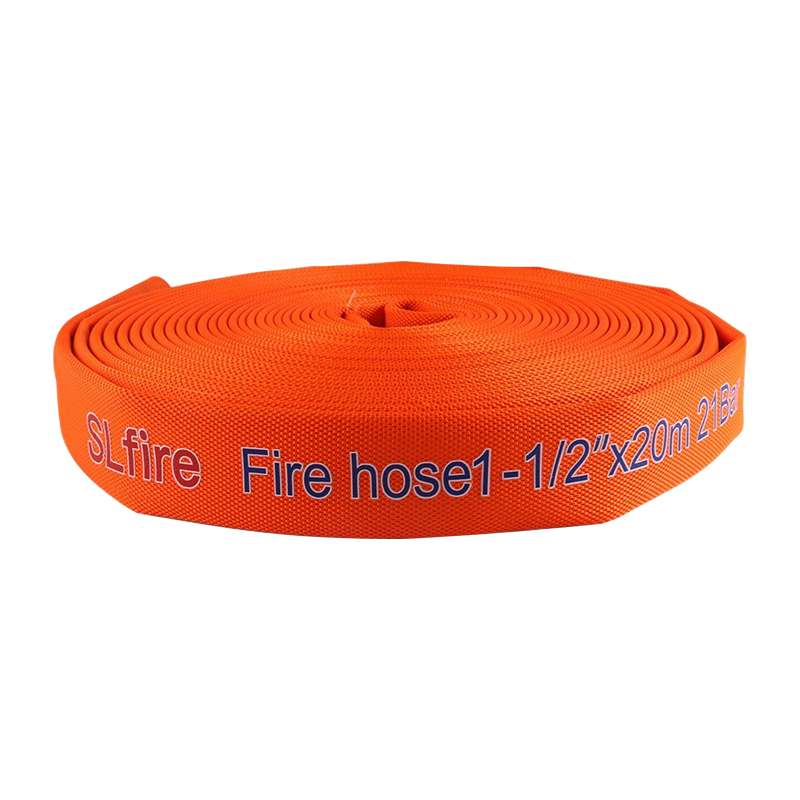
Single jacket, TPU liner •High-tenacity polyester yarn, circular woven in twill weave, TPU lining, f...
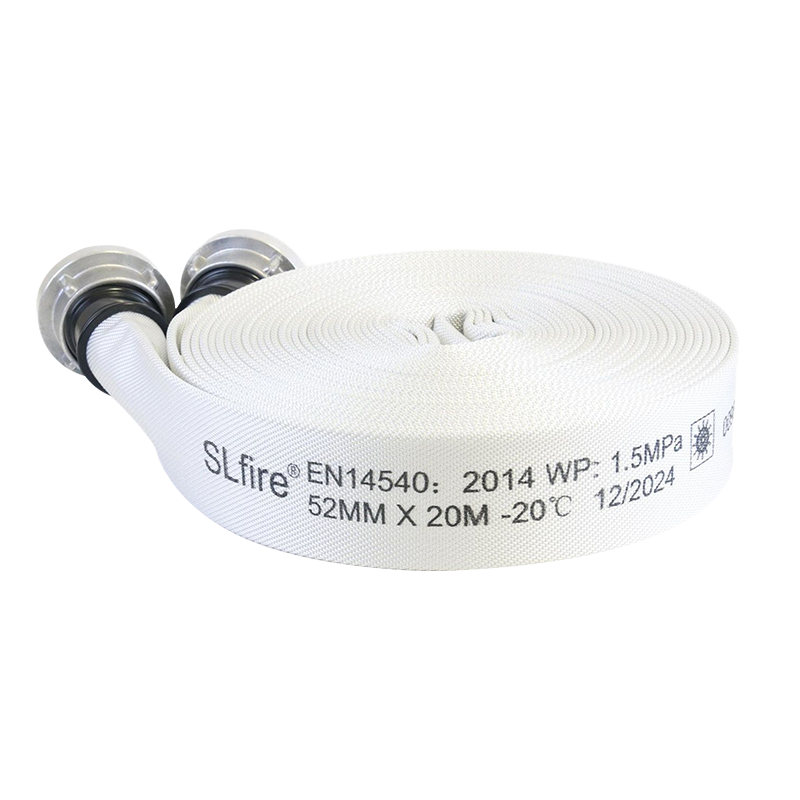
Marine hose Single jacket, PVC liner •100% high tenacity polyester yarn, circular woven in twill wea...
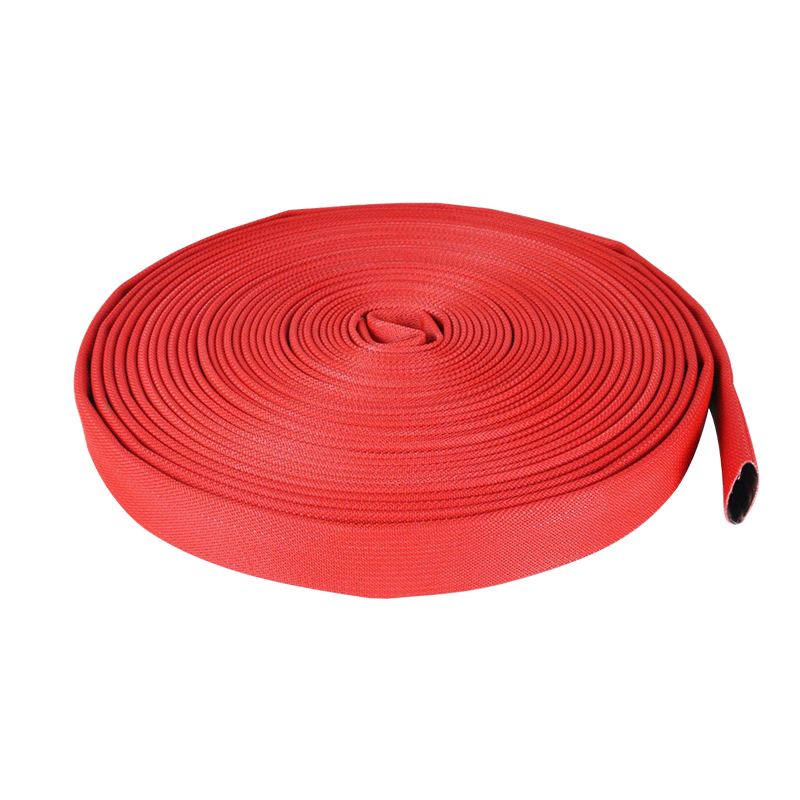
Marine hose Single jacket, PVC liner, PU coated •100% high tenacity polyester yarn,c ircular woven i...
 Call Us
+86 159-5116-9511
Need Support
Head Office
No.58, Kechuang Road, Sixiang Street Medicine Gaoxin District Taizhou City, Jiangsu Province

An automatic nozzle is one of those pieces of equipment that quietly does a lot of work on the fireground. Instead of asking the nozzle operator to pick a flow and then watch the pump panel, an autom...
Copyright © Taizhou Shenlong Fire Science and Technology Co., Ltd. All Rights Reserved.
 Fire Hose Manufacturers, Fire Hydrant Hose Factory