

 English
 русский
 Español
 Deutsch
 عربى
عربى Français
 Português
Don't hesitate to send a message
Single jacket, EPDM rubber liner Features • 100% high tenacity polyester jacket, high-grade EPDM rub...
Content
Friction loss in fire hose is the reduction in water pressure that occurs as water flows through the length of a hose, caused by the resistance between the moving water and the inner walls of the hose. It is not a minor operational inconvenience — it is a fundamental hydraulic constraint that determines whether a nozzle delivers adequate flow and pressure at the point of attack, or whether a crew arrives at a fire with insufficient water to control it.
Every foot of hose laid, every coupling connected, every elevation change, and every increase in flow rate adds to the total friction loss that the pump operator must overcome. In a worst-case scenario, unaccounted friction loss has contributed to fireground fatalities — crews advancing into structures with hose layouts generating far more friction loss than the pump was compensating for, resulting in inadequate nozzle pressure when it was needed most. Understanding, calculating, and managing friction loss is therefore not academic — it is operationally critical for every firefighting organization.
Friction loss arises from three interacting physical phenomena as water moves through a fire hose under pressure.
Water molecules in direct contact with the hose interior wall are slowed by adhesion forces. This creates a velocity gradient across the hose cross-section — water at the center flows fastest; water at the wall is essentially stationary. The energy required to maintain this velocity profile is drawn from the pressure in the hose. Rougher interior surfaces increase this energy loss; smooth-bore synthetic hose liners minimize it compared to older rubber or fabric-lined constructions.
At the flow velocities typical in fire hose operations, water flow is almost always turbulent rather than laminar. Turbulent flow causes water molecules to collide randomly, converting kinetic energy (pressure) into heat through internal friction. The degree of turbulence — quantified by the dimensionless Reynolds number — increases with velocity and hose diameter-to-roughness ratio. In practical terms, turbulence means friction loss increases approximately as the square of flow rate: doubling the flow rate quadruples the friction loss, all else being equal.
Couplings, reducers, wye appliances, master stream devices, and sharp bends in hose all create additional pressure losses beyond the straight-hose friction loss. These "minor losses" are expressed as equivalent lengths of straight hose — a standard 2½-inch gated wye, for example, has an equivalent resistance of approximately 25 feet of 2½-inch hose at typical flows. In complex hose layouts with multiple appliances, minor losses can represent a significant fraction of total system loss.
Five variables govern how much friction loss occurs in any given hose lay. Understanding how each one affects the result is the foundation for practical hydraulic calculations on the fireground.
Hose diameter is the single most powerful variable affecting friction loss. Friction loss decreases approximately as the fifth power of the diameter — meaning that doubling the hose diameter reduces friction loss by a factor of approximately 32 at the same flow rate. This relationship explains why large-diameter hose (LDH) at 4 or 5 inches is used for supply lines: running 1,000 GPM through 4-inch hose generates a fraction of the friction loss that the same flow would generate through 2½-inch hose.
As noted above, friction loss increases approximately with the square of the flow rate in turbulent flow conditions. A hose layout that generates 10 PSI of friction loss per 100 feet at 100 GPM will generate approximately 40 PSI per 100 feet at 200 GPM — not 20 PSI. This non-linear relationship means that flow rate increases have a disproportionately large impact on friction loss, and pump operators must account for this when crews increase nozzle flow mid-operation.
Friction loss is directly proportional to hose length — doubling the length doubles the friction loss at constant flow rate and diameter. Standard fire hose lays are measured in 50-foot or 100-foot increments, and friction loss tables are typically expressed per 100 feet of hose to simplify calculations. Every additional section of hose added to a lay requires a corresponding increase in pump discharge pressure to maintain nozzle pressure.
New hose with smooth interior linings generates less friction loss than older hose with degraded liners, kinks, or collapsed sections. The friction loss coefficients published in standard tables assume hose in good serviceable condition. Kinked hose can generate local friction losses several times higher than straight-lay values at the kink point — a significant operational hazard when crews are relying on calculated pump pressures.
While elevation change is technically a separate phenomenon from friction loss (it is a hydrostatic pressure change rather than a friction effect), it must be accounted for in total pump pressure calculations alongside friction loss. Every 1 foot of elevation gain requires approximately 0.434 PSI of additional pump pressure; a 10-story building with floors at approximately 10-foot intervals requires roughly 43 PSI of additional pressure per floor above street level, stacked on top of all friction losses in the hose layout.
Several friction loss formulas are used in fire service hydraulics. The two most widely applied in North American fire departments are the Underwriters' Formula (also called the hand method or 2Q² + Q formula) and the more precise Hazen-Williams equation. Both give results in PSI per 100 feet of hose.
The most widely taught formula for fireground friction loss calculation in 2½-inch hose:
FL = 2Q² + Q
Where Q = flow rate in hundreds of GPM (so 250 GPM = Q of 2.5), and FL = friction loss in PSI per 100 feet of 2½-inch hose.
Example: At 250 GPM through 2½-inch hose — Q = 2.5 — FL = 2(2.5²) + 2.5 = 2(6.25) + 2.5 = 12.5 + 2.5 = 15 PSI per 100 feet.
This formula is designed specifically for 2½-inch hose and is not directly applicable to other diameters. For other hose sizes, correction factors or separate tables are used.
A more general friction loss formula applicable to any hose diameter:
FL = C × Q² × L
Where C = friction loss coefficient for the specific hose diameter (from published tables), Q = flow in hundreds of GPM, and L = hose length in hundreds of feet.
The coefficient C varies significantly with hose diameter — illustrating the dramatic effect diameter has on friction loss. Standard coefficient values used in IFSTA and NFPA hydraulics references are approximately:
The enormous difference between 1¾-inch (C = 15.5) and 5-inch (C = 0.08) hose illustrates precisely why large-diameter supply lines are used for high-volume water delivery — the physics make any other approach hydraulically impractical at scale.
| Hose Size | 100 GPM | 150 GPM | 200 GPM | 300 GPM | 500 GPM | 1,000 GPM |
|---|---|---|---|---|---|---|
| 1¾ inch | 15.5 PSI | 34.9 PSI | 62.0 PSI | 139.5 PSI | — | — |
| 2½ inch | 2.0 PSI | 4.5 PSI | 8.0 PSI | 18.0 PSI | 50.0 PSI | — |
| 3 inch | 0.8 PSI | 1.8 PSI | 3.2 PSI | 7.2 PSI | 20.0 PSI | — |
| 4 inch LDH | 0.2 PSI | 0.45 PSI | 0.8 PSI | 1.8 PSI | 5.0 PSI | 20.0 PSI |
| 5 inch LDH | 0.08 PSI | 0.18 PSI | 0.32 PSI | 0.72 PSI | 2.0 PSI | 8.0 PSI |
These values clearly illustrate why 1¾-inch attack hose — generating over 60 PSI of friction loss per 100 feet at 200 GPM — limits practical lay length to 200–300 feet before pump pressures approach operational limits. By contrast, 5-inch supply hose can deliver 1,000 GPM over a mile-long lay with manageable total friction loss.
The pump operator's goal is to determine the required engine pressure (EP) — also called pump discharge pressure (PDP) — to deliver the correct nozzle pressure (NP) at the end of any hose layout. The fundamental equation is:
EP = NP + FL + EL ± BP
Where: NP = required nozzle pressure (typically 100 PSI for smooth-bore handlines, 75 PSI for 1¾-inch combination nozzles at low-pressure settings, 100–200 PSI for master streams); FL = total friction loss across all hose sections; EL = elevation loss (0.434 PSI per foot of elevation gain, subtracted for downhill lay); BP = back pressure from appliances.
Scenario: 200 feet of 1¾-inch attack hose flowing 150 GPM through a combination nozzle at 75 PSI nozzle pressure. No elevation change.
Scenario: 150 feet of 2½-inch hose flowing 250 GPM from a standpipe connection on the 10th floor (approximately 90 feet elevation) through a smooth-bore nozzle requiring 50 PSI nozzle pressure.
This illustrates why high-rise standpipe operations require fire department pumpers to supplement building system pressure — most standpipe systems are designed to deliver 100 PSI at the highest outlet, which is insufficient to overcome both elevation and friction losses in the attack hose without supplemental pumping.
Real fireground hose layouts rarely involve a single hose line at a constant diameter. Pump operators must calculate friction loss for parallel lays, wyed layouts, and siamesed supply lines — each requiring a different calculation approach.
The simplest layout — total friction loss is the sum of friction losses across each section of hose. If sections have different diameters (e.g., a 3-inch supply line reduced to 1¾-inch attack hose via a gated wye), calculate friction loss separately for each section at the actual flow through that section.
When a single supply line is split via a wye appliance into two attack lines, the total flow is divided between the two branches. If both branches are identical and flowing equally, each carries half the total flow. Friction loss is calculated on each branch at that reduced flow rate — not at the total flow rate. A common error is calculating friction loss at total pump flow through the attack lines, which dramatically overestimates actual friction loss and causes the pump operator to under-pressure the lines.
Example: 300 GPM total through a wye into two equal 1¾-inch attack lines. Each line carries 150 GPM — not 300 GPM. Friction loss per line is calculated at 150 GPM, giving approximately 34.9 PSI per 100 feet rather than 139.5 PSI per 100 feet that 300 GPM would generate.
Two supply lines siamesed together into a single pumper intake effectively double the flow capacity of the supply at the same friction loss. When two equal-diameter lines carry equal flows into a siamese, each carries half the total flow — so friction loss in each line is calculated at half the total delivery flow. This allows significantly higher total flows to be delivered within the pressure rating of the supply hose.
When friction loss is limiting effective flow delivery, several tactical and equipment adjustments can reduce it — some immediately available on scene, others built into department SOGs and pre-incident planning.
The most effective single intervention. Where department SOGs permit, using 2½-inch attack hose instead of 1¾-inch for high-flow operations dramatically reduces friction loss — by a factor of approximately 7–8 at the same flow rate. Many departments that have shifted to 2½-inch or 3-inch attack lines for commercial and industrial operations have achieved substantially higher effective nozzle flows from the same pump pressures.
Positioning the apparatus closer to the fire building reduces hose lay length and therefore total friction loss proportionally. A 100-foot reduction in lay length on a 1¾-inch line at 150 GPM saves approximately 35 PSI of friction loss — allowing higher nozzle pressures or flow rates from the same pump discharge pressure.
Where the hydraulic system is operating at its limit, reducing nozzle flow rate reduces friction loss as the square of the flow reduction. Reducing flow from 200 GPM to 150 GPM cuts friction loss by approximately 44% — potentially the difference between an effective and an ineffective attack. This is a tactical decision requiring command authority, but pump operators should communicate hydraulic limitations that affect nozzle performance to incident command.
Laying two parallel supply lines from a hydrant to the pumper — siamesed at the intake — doubles supply capacity and reduces friction loss in each line to one-quarter of what a single line at the same total flow would experience (since each line carries half the flow, and friction loss scales as flow squared: (½)² = ¼). For long supply lays or high-demand operations, dual supply lines are the standard solution to friction loss limitations.
Hose with degraded liners, chronic kinking, collapsed sections from crushing damage, or corroded couplings generates higher friction losses than the published coefficients predict. Regular hose testing per NFPA 1962 — annual service testing at 250 PSI for attack hose and 200 PSI for supply hose — identifies hose that has deteriorated to the point of affecting both hydraulic performance and operational safety. Hose that fails service testing should be removed from frontline service immediately.
Every appliance in a hose layout adds friction loss equivalent to tens of feet of additional hose. Reviewing standard hose load configurations to eliminate unnecessary reducers, extra couplings, and appliances that are habitually included but not operationally required can meaningfully reduce total system friction loss without any change in flow rate or hose diameter.
Fire hose friction loss characteristics are directly addressed by the manufacturing and testing standards that govern fire hose performance specifications worldwide.
NFPA 1961 establishes performance requirements for fire hose sold in the United States, including maximum acceptable pressure drop (friction loss) per 100 feet at specified test flow rates. The standard specifies that attack hose must not exceed defined friction loss limits at rated flow — ensuring that hose meeting NFPA 1961 performs within the hydraulic assumptions of standard pump pressure calculations. Hose that fails to meet these limits — whether new or in service — cannot reliably support the calculated pump pressures that crew safety depends on.
NFPA 1962 governs in-service hose maintenance and testing. Annual service testing at rated pressures identifies hose that has degraded to the point of safety risk or hydraulic performance degradation. Hose that has been run over, kinked severely, exposed to chemicals, or stored improperly may have degraded interior linings that increase friction loss above design values — a condition invisible from external inspection but detectable through pressure testing and flow measurement.
The international standard for fire hose performance, widely referenced outside North America. ISO 14557 specifies pressure loss (friction loss) requirements across standardized test conditions, providing an internationally consistent benchmark for hose hydraulic performance that supports the friction loss calculations used by fire departments globally.
The most effective friction loss management happens before the incident — during pre-incident planning for target hazards, when hose load configurations are designed, and when department SOGs establish standard operating pump pressures for common hose layouts.
Friction loss in fire hose is an immutable physical reality — it cannot be eliminated, only understood and managed. Departments that embed hydraulic literacy into their training culture, standardize their hose loads around realistic friction loss calculations, and equip their pump operators with the knowledge to adapt in non-standard situations consistently deliver more effective and safer fireground water supply than those that treat hydraulics as a theoretical exercise. Adequate nozzle pressure starts with accurate friction loss accounting.
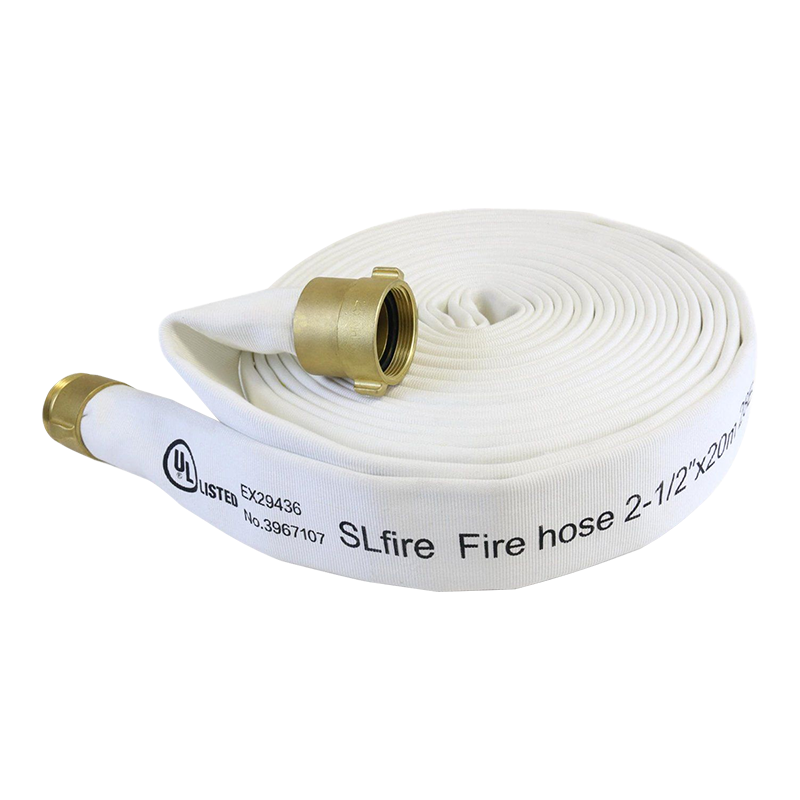
Single jacket, EPDM rubber liner Features • 100% high tenacity polyester jacket, high-grade EPDM rub...
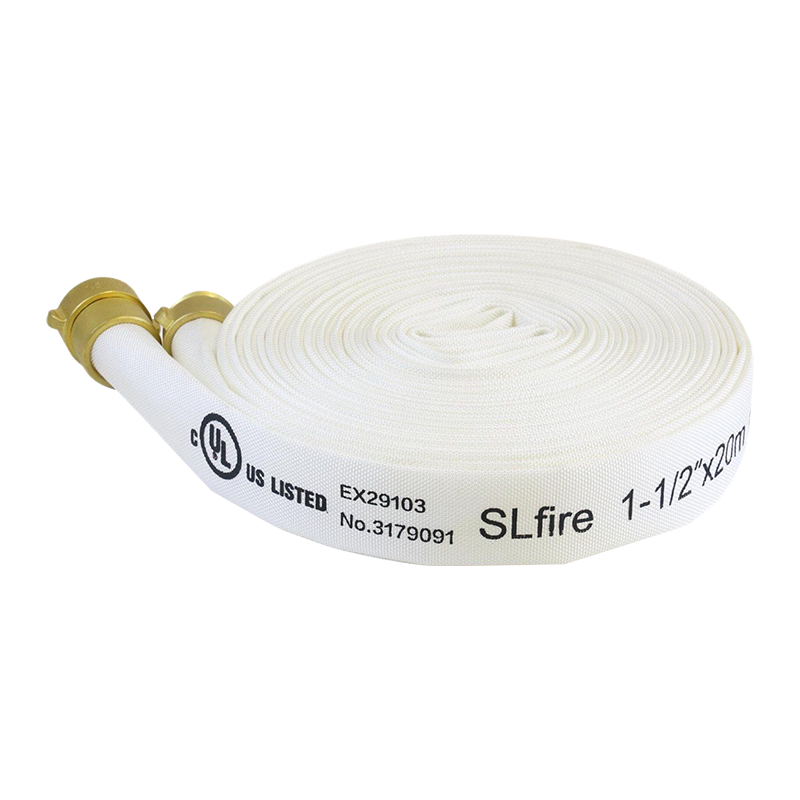
Single jacket, TPU liner •High-tenacity polyester yarn, circular woven in twill weave/plain weave,T ...
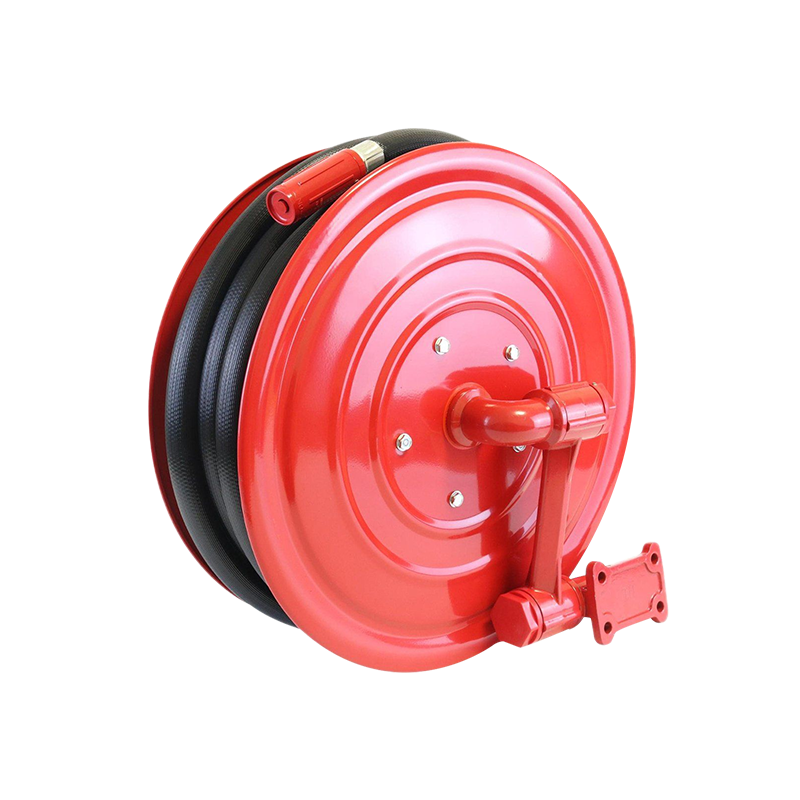
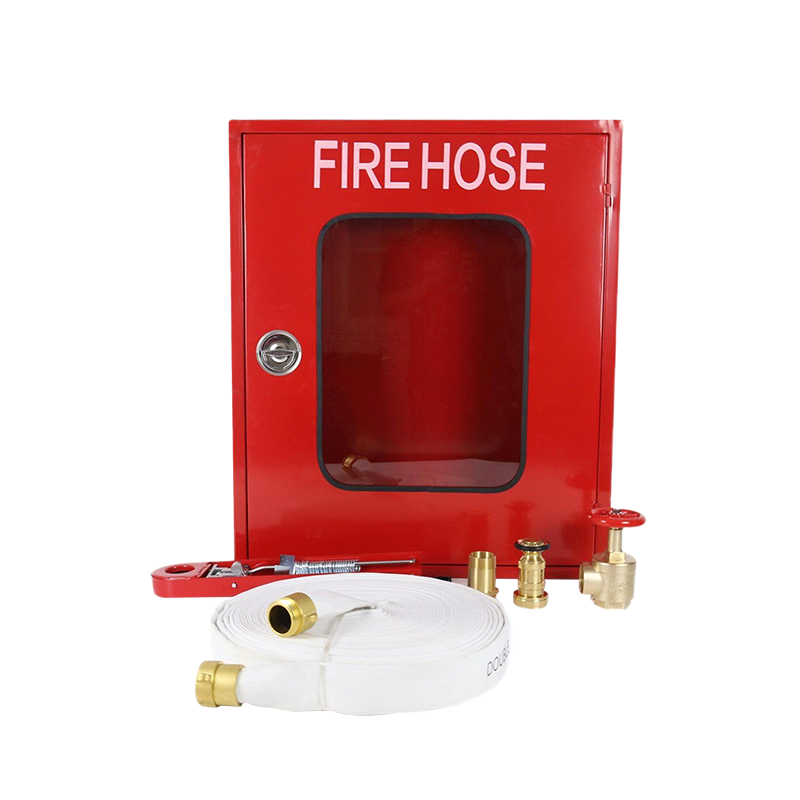
Fire cabinets are designed to accommodate fire hose,valve and other firefighting equipment. Type 201...

Nitrile covered hose •Nitrile/TPR blend as cover and lining, with 100% high-tenacity polyester yarn ...
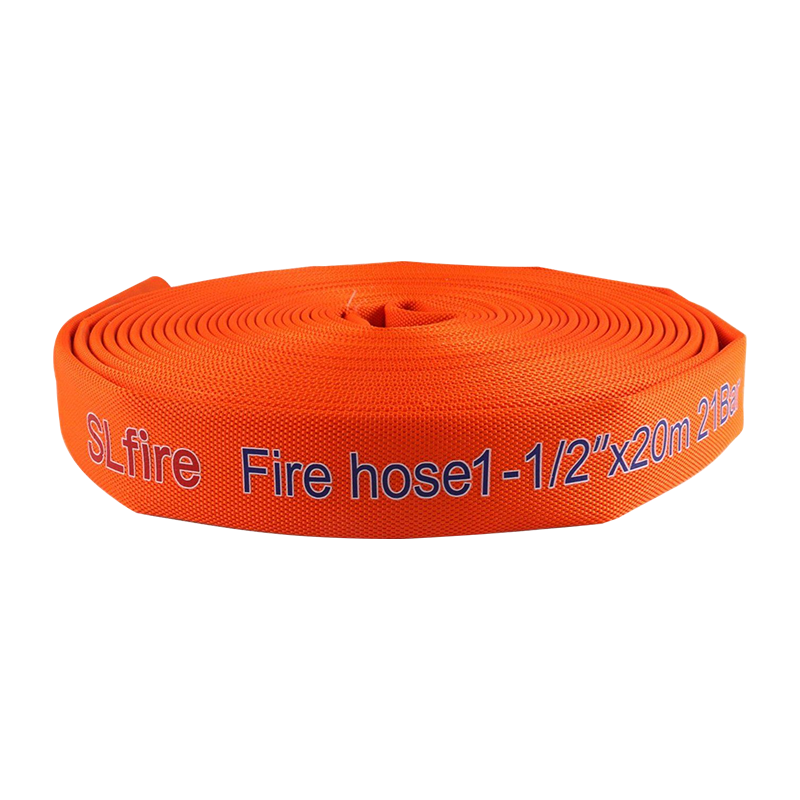
Single jacket, TPU liner •High-tenacity polyester yarn, circular woven in twill weave, TPU lining, f...
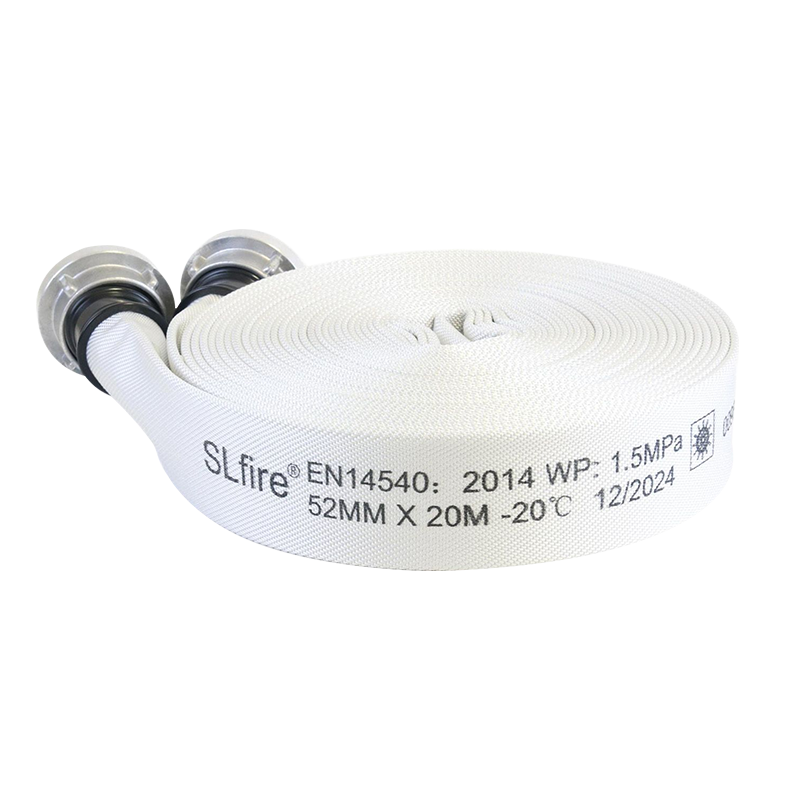
Marine hose Single jacket, PVC liner •100% high tenacity polyester yarn, circular woven in twill wea...
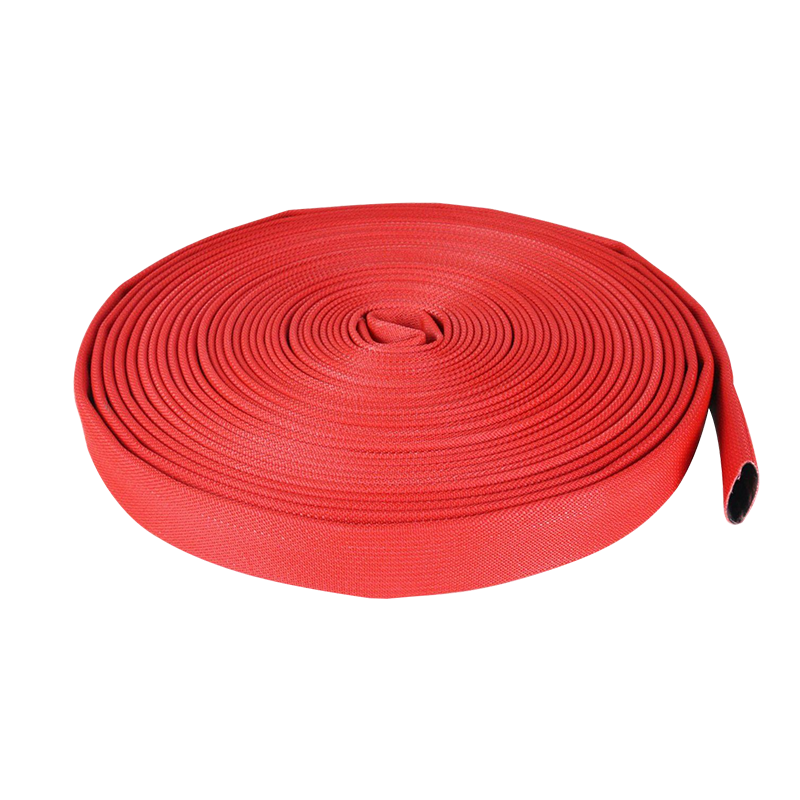
Marine hose Single jacket, PVC liner, PU coated •100% high tenacity polyester yarn,c ircular woven i...
 Call Us
+86 159-5116-9511
Need Support
Head Office
No.58, Kechuang Road, Sixiang Street Medicine Gaoxin District Taizhou City, Jiangsu Province

During a routine service test, a 200-foot attack line fails at 150 psi. The outer jacket looks fine. The problem is inside: a small delamination in the liner has pinched the bore and reduced the flow...
Copyright © Taizhou Shenlong Fire Science and Technology Co., Ltd. All Rights Reserved.
 Fire Hose Manufacturers, Fire Hydrant Hose Factory