

 English
 русский
 Español
 Deutsch
 عربى
عربى Français
 Português
Don't hesitate to send a message
Single jacket, EPDM rubber liner Features • 100% high tenacity polyester jacket, high-grade EPDM rub...
Content
A fire hose nozzle is far more than a simple fitting at the end of a hose line. It is the primary tool through which a firefighter controls the shape, reach, flow rate, and impact force of the water stream being applied to a fire. The nozzle determines whether water reaches the seat of a fire deep inside a structure, whether it forms a protective fog shield around advancing crews, or whether it delivers a wide-angle pattern for cooling down an exposure. Choosing the wrong nozzle for a given fire type or operational scenario does not just reduce efficiency — it can allow a fire to grow faster than the water application can suppress it, put firefighters at unnecessary risk, and waste a limited water supply at a critical moment.
Modern fire hose nozzles are precision-engineered devices built to exacting performance standards set by organizations such as the National Fire Protection Association (NFPA) in the United States, and equivalent bodies in other countries. They are designed to deliver specific flow rates at specific inlet pressures, and their internal geometry — the shape of the waterway, the orifice diameter, the deflector or baffle design — is carefully optimized to produce the intended discharge pattern with consistent, predictable performance under the physically demanding conditions of active firefighting operations. Understanding how these devices work and what distinguishes one type from another is fundamental knowledge for any firefighter, fire equipment purchaser, or safety officer responsible for equipping a fire department or industrial fire brigade.
Fire hose nozzles are broadly categorized by their flow control mechanism and the discharge pattern they produce. Each type is engineered for a specific range of applications, and understanding the operational characteristics of each helps departments select and deploy the right equipment for their risk profile.
Smooth bore nozzles — also called solid bore or straight stream nozzles — produce a compact, cylindrical column of water with minimal turbulence and maximum reach. The waterway inside a smooth bore nozzle is a simple, polished cylindrical bore of fixed diameter, with no internal deflectors, baffles, or flow-shaping mechanisms. This simplicity is its greatest operational advantage: smooth bore nozzles operate effectively over a wide range of inlet pressures, are highly resistant to clogging from debris in the water supply, and deliver the greatest volume of water per unit of nozzle reaction force compared to any other nozzle type. The straight, high-velocity stream they produce penetrates smoke and heat layers effectively, allowing water to reach the base of a fire from a greater distance than fog or combination patterns can achieve. Standard handline smooth bore tips operate at 50 psi (3.5 bar) nozzle pressure, while master stream smooth bore tips are rated at 80 psi (5.5 bar).
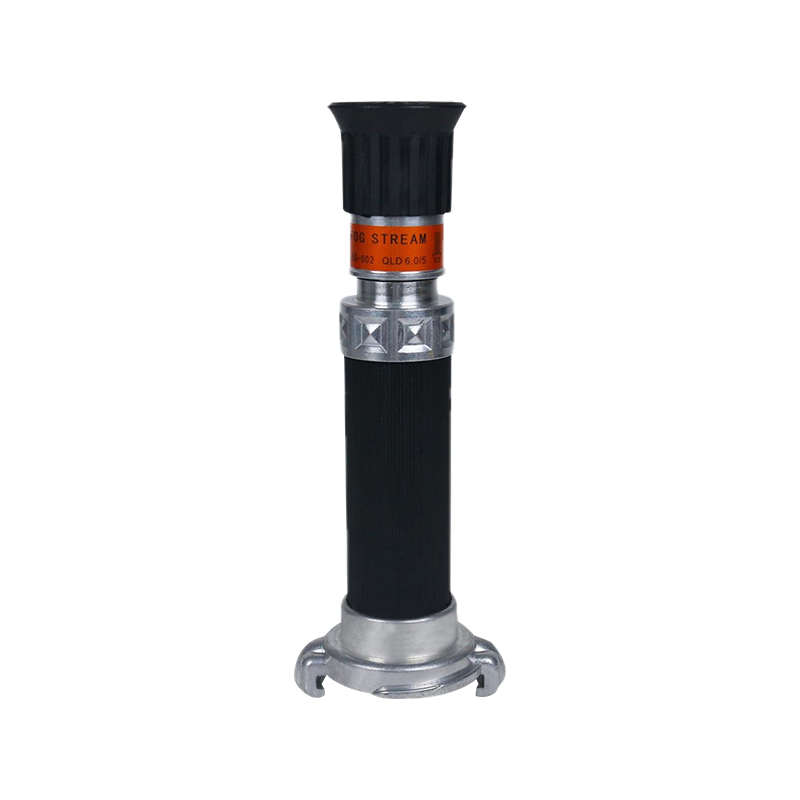
Fog nozzles use internal deflector mechanisms to break the water stream into fine droplets and distribute them across an adjustable cone-shaped pattern that ranges from a narrow straight stream to a wide-angle fog of 90 or 120 degrees. The fine droplets produced at wide fog settings have a very high surface area-to-volume ratio, which dramatically accelerates steam conversion when applied directly to flames — absorbing large amounts of heat energy per liter of water discharged. This makes fog nozzles particularly effective for gas-phase combustion suppression and for protecting firefighters from radiant heat behind a fog curtain. However, fog patterns are significantly more susceptible to wind dispersion than smooth bore streams, and the higher operating pressures required — typically 100 psi (7 bar) — create greater nozzle reaction forces that fatigue firefighters more quickly during sustained operations.
Combination nozzles — the most widely used type in structural firefighting globally — integrate both straight stream and fog pattern capabilities into a single adjustable device. By rotating the nozzle's outer barrel or actuating a internal pattern-change mechanism, the operator can switch between a straight stream, a narrow fog angle, and a wide fog angle without releasing the nozzle or interrupting water flow. This versatility makes combination nozzles the standard choice for engine company handlines where crews may need to transition between attacking a room fire with a straight stream, protecting a hallway advance with a fog curtain, and cooling an exterior exposure in rapid succession. Most combination nozzles are also available with automatic pressure-compensating flow control that maintains a consistent nozzle pressure across a range of inlet pressures — a feature that simplifies pump operator responsibilities during dynamic fireground conditions.
Automatic nozzles contain an internal spring-loaded mechanism that continuously adjusts the orifice opening to maintain a constant nozzle pressure — typically 100 psi — across a wide range of flow rates, from as low as 60 GPM to as high as 350 GPM or more depending on the model. This means that as the pump operator increases or decreases the supply pressure, the nozzle automatically compensates, always delivering its designed discharge pattern regardless of pressure fluctuations caused by elevation changes, hose length variations, or other lines opening and closing on the same pump. Automatic nozzles simplify fireground hydraulics significantly but require firefighters to understand that the flow rate they are receiving is variable — a consideration that matters when estimating the water supply required to control a given size fire.
Selecting the right fire hose nozzle requires comparing several performance characteristics side by side. The table below summarizes the most important operational parameters for the four primary nozzle types used in structural and industrial firefighting.
| Nozzle Type | Operating Pressure | Flow Rate (GPM) | Pattern Options | Best Application |
| Smooth Bore | 50–80 psi | 160–325+ | Straight stream only | Structural attack, long-range streams |
| Fog Nozzle | 100 psi | Fixed (set by orifice) | Narrow to wide fog | Gas fires, heat shielding |
| Combination | 75–100 psi | 100–250 | Straight, narrow fog, wide fog | General structural firefighting |
| Automatic | 100 psi (constant) | 60–350 (variable) | Straight, narrow fog, wide fog | Variable flow demands, relay pumping |
Beyond the standard structural firefighting nozzle types, a range of specialized nozzles has been developed to address specific hazard classes, confined space challenges, and tactical requirements that general-purpose equipment cannot handle effectively.
The materials used to construct fire hose nozzles must withstand extreme mechanical and thermal stresses while remaining lightweight enough for firefighters to maneuver effectively during physically demanding operations. Material selection also affects corrosion resistance, which directly determines the service life of the nozzle in field conditions.
Aluminum alloy is the most common material for handline nozzle bodies due to its excellent strength-to-weight ratio, natural corrosion resistance from surface oxide formation, and ease of precision machining. Most aluminum fire nozzles are manufactured from 6061-T6 or similar aerospace-grade alloys that provide sufficient impact resistance to survive the rough handling inevitable in emergency service use. Aluminum nozzles are typically anodized or powder-coated to provide additional corrosion protection and to allow color-coding by size or flow rate for rapid identification on the fireground.
Critical wear components such as shut-off valves, tip seats, pattern adjustment mechanisms, and swivel connections are frequently manufactured from stainless steel or brass rather than aluminum. These materials offer superior resistance to galling — the adhesive wear that occurs when two metal surfaces slide against each other under pressure — and maintain tighter dimensional tolerances over years of repeated operation. Brass is particularly valued for its compatibility with chlorinated water supplies and its self-lubricating properties that keep valve mechanisms operating smoothly even after extended periods of inactivity in apparatus storage.
Modern nozzle designs increasingly incorporate glass-fiber reinforced nylon or polycarbonate components for grip surfaces, bumper guards, and flow control sleeves. These polymers are electrically non-conductive — an important safety property when operating near energized electrical equipment — and resist degradation from hydrocarbon fuels, foam concentrates, and other chemicals encountered at hazardous materials incidents. Their lower thermal conductivity compared to metal also means that polymer grip surfaces remain cooler to hold in proximity to intense radiant heat sources, reducing firefighter fatigue during extended operations.
Selecting fire hose nozzles for a department or industrial fire brigade requires evaluating multiple technical and operational factors simultaneously. A decision based solely on purchase price or brand familiarity frequently results in equipment that underperforms in the specific operational context for which it is purchased.
Fire hose nozzles must be inspected, tested, and maintained on a regular schedule to ensure they perform as designed when called upon in an emergency. NFPA 1962 provides guidance on the inspection and testing of fire hose, couplings, and nozzles, and most fire departments and industrial brigades incorporate nozzle inspection into their monthly and annual equipment checks.
Monthly inspections should include a visual examination of the nozzle body for cracks, dents, or corrosion; verification that the shutoff valve opens and closes smoothly through its full range; confirmation that the pattern adjustment mechanism moves freely between all positions; and a check that the inlet coupling gasket is present, undamaged, and correctly seated. Any nozzle showing signs of structural damage, valve leakage, or pattern mechanism binding should be removed from service and repaired or replaced before being returned to apparatus.
Annual flow testing using calibrated flow meters and pressure gauges confirms that the nozzle is delivering its rated flow at its rated operating pressure. Nozzles that have experienced significant wear to the orifice tip — particularly smooth bore tips, which are susceptible to erosion from high-velocity water carrying abrasive particles — may flow substantially more water than their rated output, creating hydraulic imbalances that affect the entire hose line. Orifice gauges or flow tests identify worn tips before this condition causes operational problems on the fireground, allowing planned replacement during routine maintenance rather than emergency substitution during an incident.
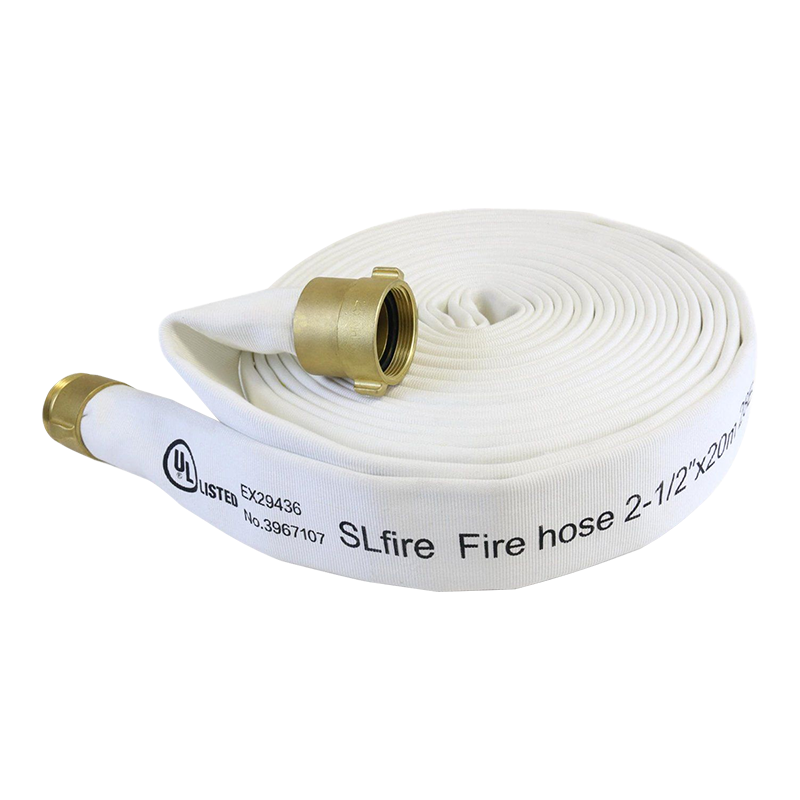
Single jacket, EPDM rubber liner Features • 100% high tenacity polyester jacket, high-grade EPDM rub...
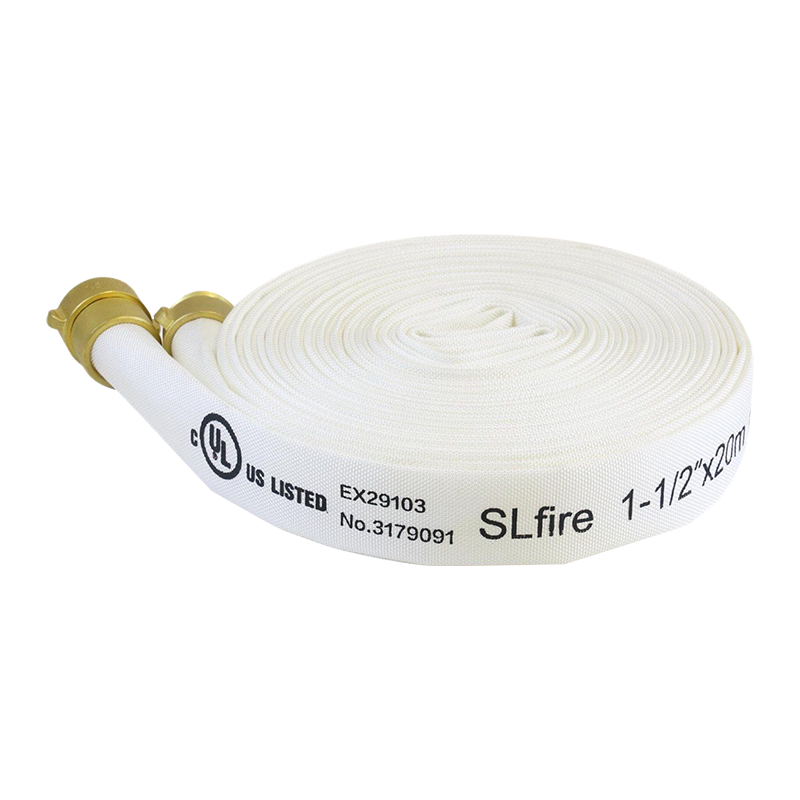
Single jacket, TPU liner •High-tenacity polyester yarn, circular woven in twill weave/plain weave,T ...
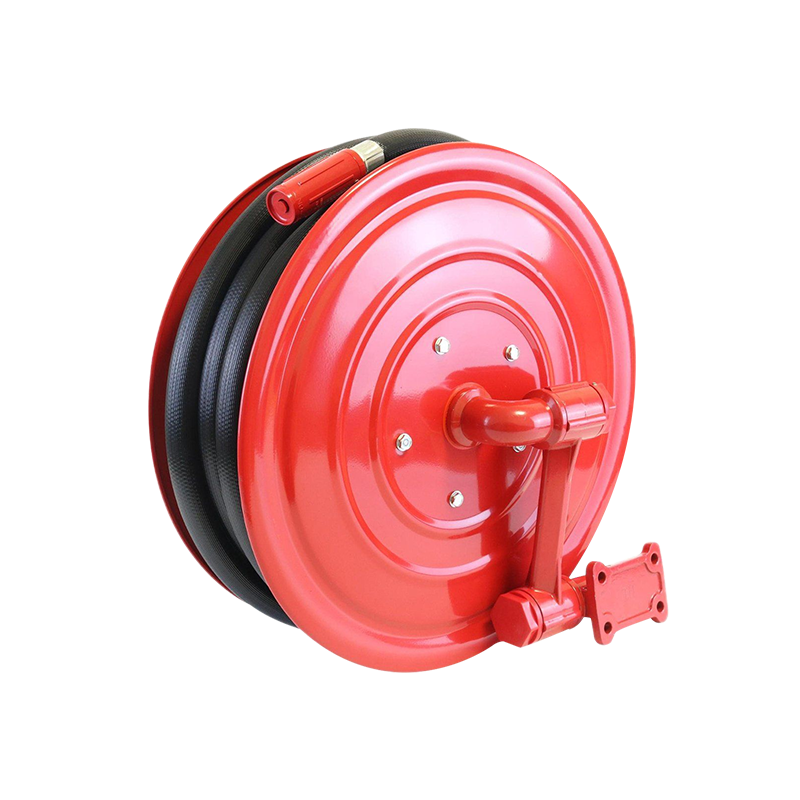
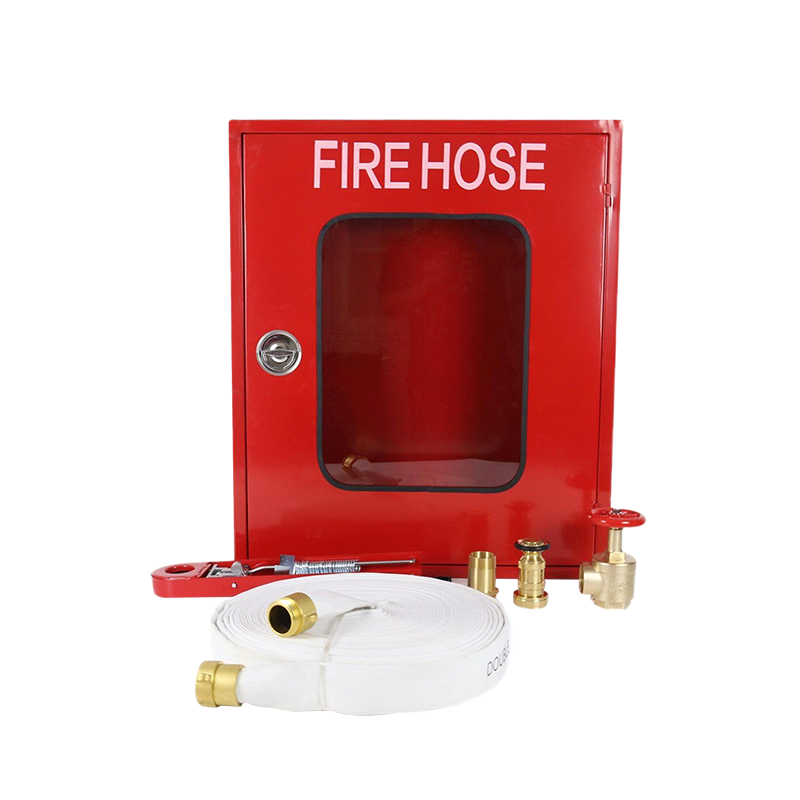
Fire cabinets are designed to accommodate fire hose,valve and other firefighting equipment. Type 201...
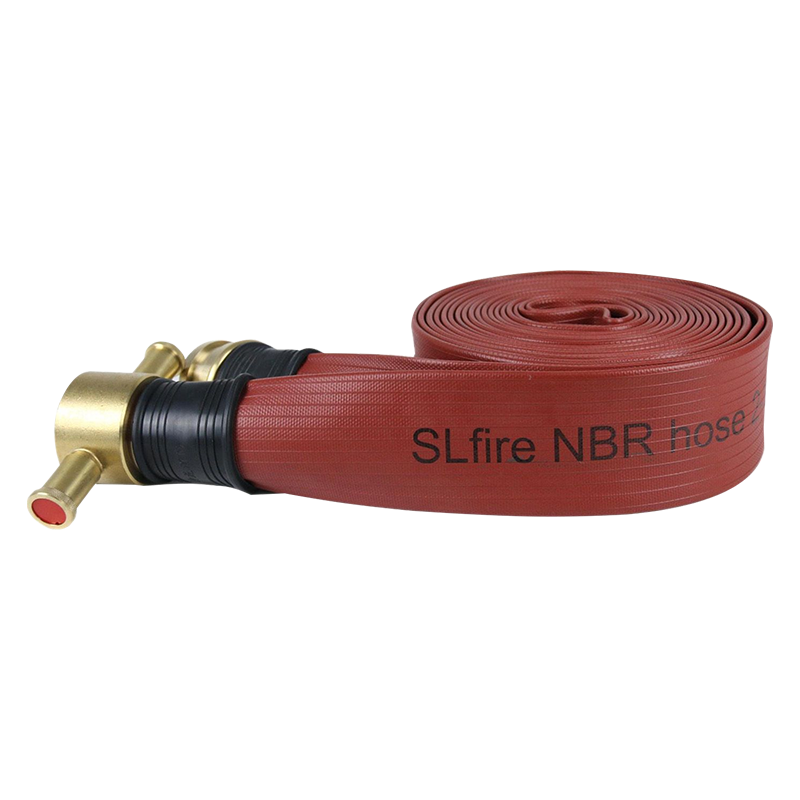
Nitrile covered hose •Nitrile/TPR blend as cover and lining, with 100% high-tenacity polyester yarn ...
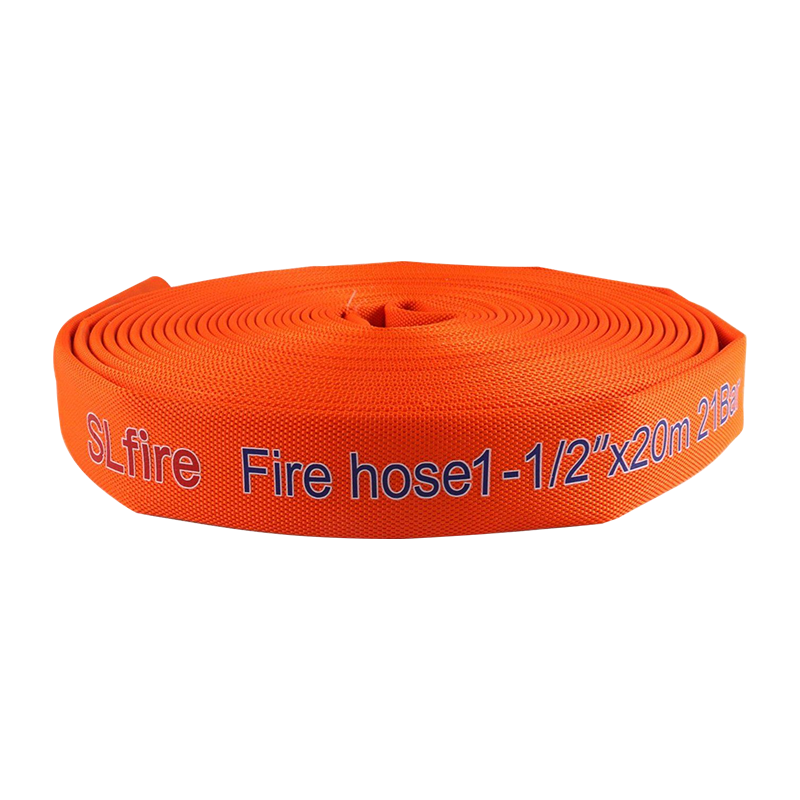
Single jacket, TPU liner •High-tenacity polyester yarn, circular woven in twill weave, TPU lining, f...
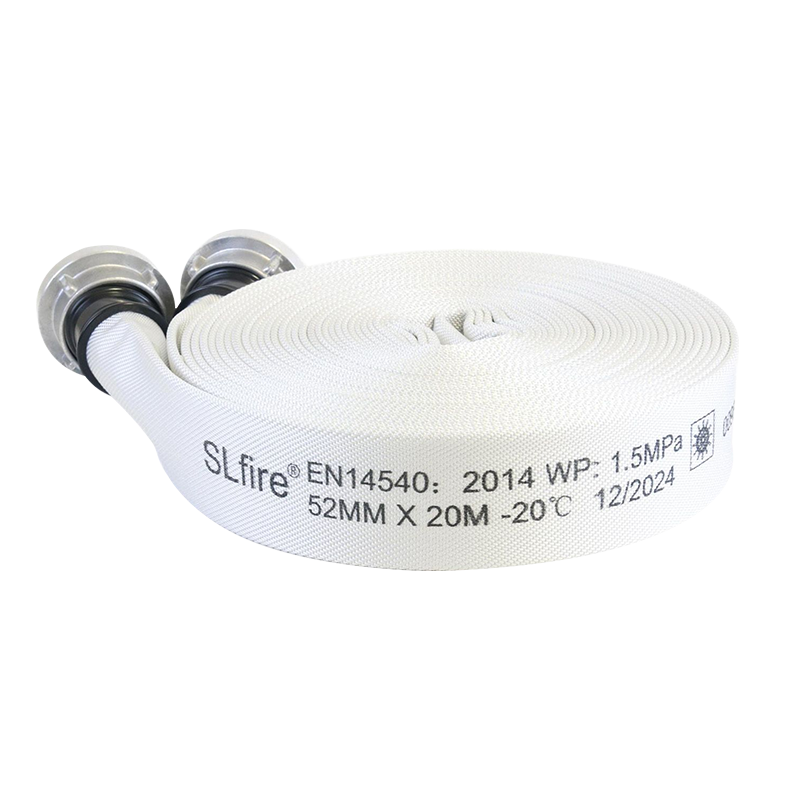
Marine hose Single jacket, PVC liner •100% high tenacity polyester yarn, circular woven in twill wea...
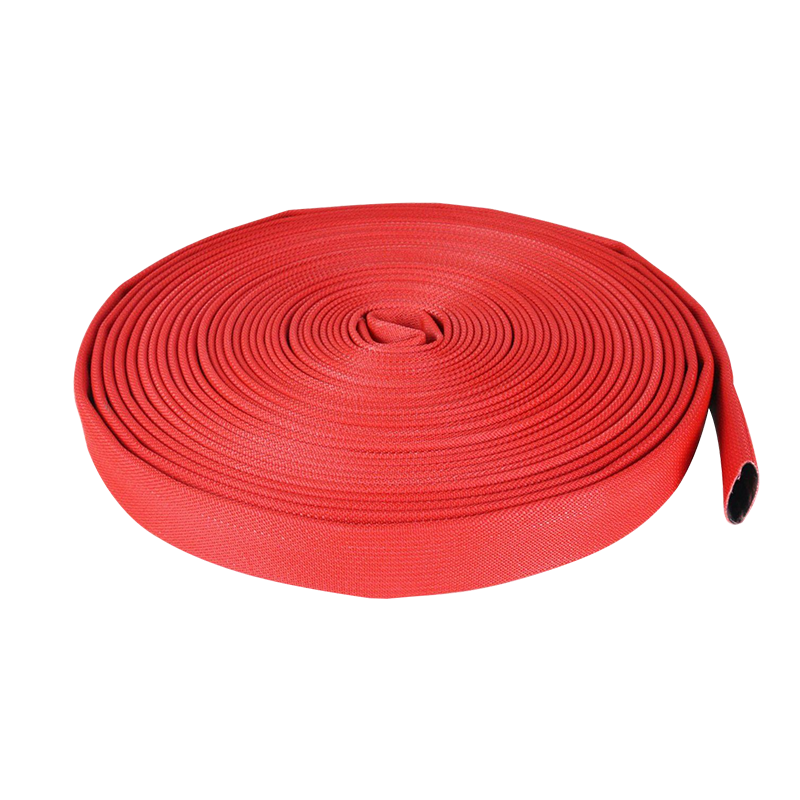
Marine hose Single jacket, PVC liner, PU coated •100% high tenacity polyester yarn,c ircular woven i...
 Call Us
+86 159-5116-9511
Need Support
Head Office
No.58, Kechuang Road, Sixiang Street Medicine Gaoxin District Taizhou City, Jiangsu Province

During a routine service test, a 200-foot attack line fails at 150 psi. The outer jacket looks fine. The problem is inside: a small delamination in the liner has pinched the bore and reduced the flow...
Copyright © Taizhou Shenlong Fire Science and Technology Co., Ltd. All Rights Reserved.
 Fire Hose Manufacturers, Fire Hydrant Hose Factory