

 English
 русский
 Español
 Deutsch
 عربى
عربى Français
 Português
Don't hesitate to send a message
Single jacket, EPDM rubber liner Features • 100% high tenacity polyester jacket, high-grade EPDM rub...
Content
When a fire breaks out, the effectiveness of the suppression response depends not just on the volume of water available but on how precisely and efficiently that water is delivered to the fire. The fire hose and its nozzle work as an integrated system, and mismatching either component to the fire type, building layout, or operational requirement can result in inadequate fire control, unnecessary water damage, or dangerous conditions for firefighters. Understanding the different types of fire hose nozzles, how fire water hoses are classified, and how these components work together is essential knowledge for fire safety professionals, facility managers, and anyone responsible for maintaining or deploying firefighting equipment.
A fire hose nozzle is the terminal fitting attached to the discharge end of a fire hose that controls the shape, flow rate, velocity, and pattern of the water stream directed at a fire. While it may appear to be a simple mechanical fitting, the nozzle is actually a precision hydraulic device that determines whether water reaches the seat of the fire effectively, whether it converts efficiently into steam for heat absorption, and whether the operating firefighter can maintain control under the reaction forces generated by the water stream.
Different fire scenarios demand fundamentally different water delivery characteristics. A direct flame attack on a structural fire requires a high-velocity straight stream that can penetrate deep into burning material. A wildland fire in dry brush may require a wide fog pattern to cool the surrounding area and protect the firefighter. A Class B fuel fire may demand a specific combination of flow rate and pattern to avoid spreading flammable liquid. Selecting the wrong nozzle type reduces suppression effectiveness and can actively worsen the situation. This is why fire hose nozzle type selection is a core competency in fire suppression planning and operations.
Fire hose nozzles are broadly categorized by their flow pattern capability, flow rate control method, and intended application. Each type has specific operational strengths and limitations that determine where it is most appropriately used.
The smooth bore nozzle — also called a solid bore or straight tip nozzle — is the simplest and oldest nozzle design in firefighting. It consists of a cylindrical tip with a smooth, unobstructed bore that produces a single coherent straight stream. The tip diameter is fixed and determines the flow rate at a given operating pressure. Common tip diameters for handline operations range from 15 mm (5/8 inch) to 32 mm (1¼ inch), while master stream smooth bore tips may reach 44 mm (1¾ inch) or larger.
Smooth bore nozzles are valued for their ability to deliver high-flow streams with minimal nozzle reaction force relative to the water flow energy, their mechanical simplicity with no moving parts to fail, and their ability to maintain stream coherence over long throw distances — often exceeding 30 to 40 meters. They are the preferred choice for aggressive interior structural attack and for situations where maximum water delivery over distance is required. Their limitation is the absence of any pattern adjustment; they produce only a straight stream and cannot create a fog or spray pattern for vapor cooling or crew protection.
The combination nozzle, widely known as the fog nozzle, is the most versatile nozzle type in modern firefighting and the standard equipment on the majority of fire apparatus worldwide. It uses an adjustable deflector mechanism that can be rotated or moved to produce a continuously variable pattern from a narrow straight stream to a wide-angle fog, typically from 0° to 100° cone angle. This pattern flexibility allows a single nozzle to handle a straight-stream direct attack, a wide fog for ventilation-controlled fire tactics, a medium fog for exposure protection, or a narrow fog for gas cooling.
Combination nozzles are available in fixed-flow and automatic (constant-pressure) variants. Fixed-flow combination nozzles deliver a set flow rate — typically 95, 190, or 250 liters per minute — at the designed operating pressure of 700 kPa (100 psi). Automatic combination nozzles incorporate a spring-loaded pressure-regulating mechanism that maintains a relatively constant nozzle pressure across a wide range of flow rates, making them more forgiving when pump pressure fluctuates. The trade-off is added mechanical complexity and more frequent maintenance requirements compared to smooth bore or fixed-flow designs.
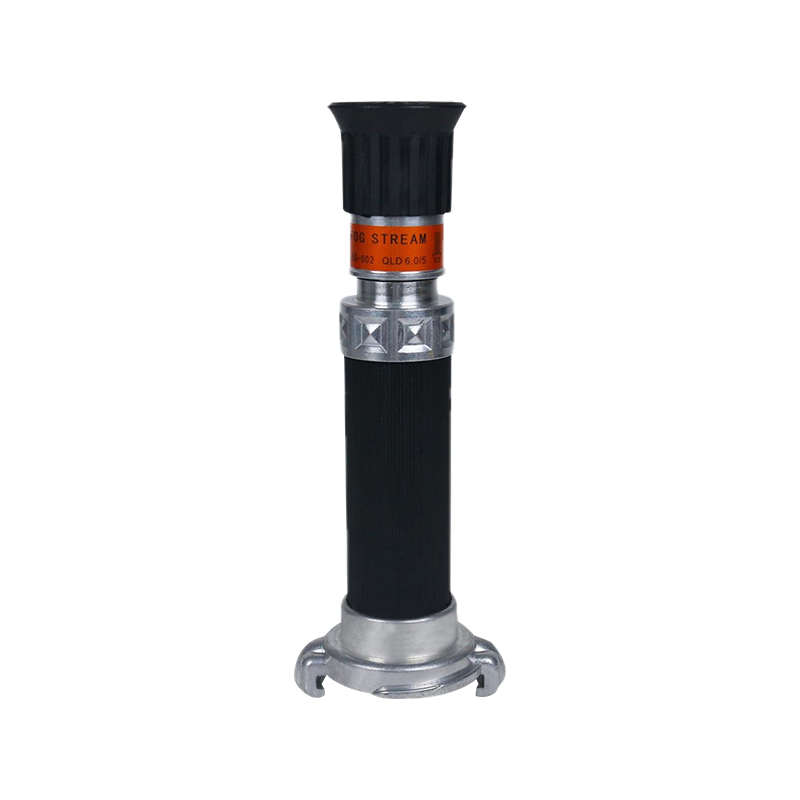
Adjustable flow nozzles allow the operator to manually select between two or more preset flow rates — for example, 115 LPM, 190 LPM, and 280 LPM — using a selector ring or selector dial on the nozzle body. This capability allows crews to match water application rate to fire conditions and available pump capacity without changing the nozzle or tip. Adjustable flow nozzles are increasingly popular on urban fire apparatus where the same hose line may be used for both residential interior attacks requiring lower flow rates and larger commercial structure fires demanding higher volumes.
Foam nozzles are specifically designed to aspirate air into a water-foam concentrate mixture, producing expanded foam that is applied to Class B (flammable liquid) fires. Air-aspirating foam nozzles draw air through induction ports around the nozzle tip, creating a low-expansion foam blanket with expansion ratios of 4:1 to 10:1. Medium and high-expansion foam generators used in enclosed spaces or aircraft hangar protection achieve expansion ratios of 100:1 to 1000:1. Foam nozzles must be matched precisely to the specific foam concentrate type and concentration being used, as using an air-aspirating nozzle with the wrong foam formulation significantly reduces knockdown performance.
Piercing nozzles are a specialized type designed to be driven or drilled through walls, roofs, or vehicle bodies to deliver water or foam into enclosed spaces where direct access is impossible or dangerous. They feature a hardened steel spike or drill tip and multiple small spray orifices just behind the tip. Once inserted, they deliver a 360° spray pattern inside the enclosed space. They are particularly valuable for fighting fires inside vehicle engine compartments, wall cavities, and aircraft fuselages, and they reduce the need to open structures that may be contributing to fire containment.
The following table summarizes the key operational characteristics of the main fire hose nozzle types to assist in selection decisions.
| Nozzle Type | Pattern Options | Flow Control | Primary Use |
| Smooth Bore | Straight stream only | Fixed by tip diameter | Structural attack, long reach |
| Combination (Fog) | Straight to wide fog | Fixed or automatic | General purpose, interior attack |
| Adjustable Flow | Straight to fog | Selectable preset flows | Variable fire scenarios |
| Foam Nozzle | Foam stream or blanket | Fixed or adjustable | Class B flammable liquid fires |
| Piercing Nozzle | 360° internal spray | Fixed | Enclosed spaces, vehicles, walls |
Fire water hoses are the conduit that delivers pressurized water from the pump to the nozzle. Like nozzles, they are not interchangeable generic products — fire hoses are engineered to specific pressure ratings, diameter classes, construction standards, and application requirements. Using an undersized, incorrectly rated, or damaged hose with a high-performance nozzle can result in hose failure, flow restriction, or injury.
Attack hose is the primary firefighting hose used directly in fire suppression operations. It is designed to be deployed quickly, withstand operational working pressures typically between 1,000 and 1,700 kPa (150 to 250 psi), and be handled by firefighters in demanding conditions. Standard attack hose diameters are 38 mm (1½ inch) and 45 mm (1¾ inch) for handline operations, with 65 mm (2½ inch) used for higher-flow handline and transitional attack operations. Attack hoses are manufactured with a woven synthetic jacket over a seamless rubber or thermoplastic liner, providing flexibility, abrasion resistance, and pressure containment.
Supply hose — also called large diameter hose (LDH) — is used to transfer water from a hydrant or water source to the fire apparatus pump, or between relay pumping apparatus. Standard LDH diameters are 100 mm (4 inch) and 125 mm (5 inch). Supply hoses operate at lower pressures than attack hoses — typically 700 to 1,000 kPa (100 to 150 psi) — but carry extremely high flow volumes, often exceeding 2,000 to 4,000 liters per minute. Their construction prioritizes high flow capacity and easy deployment over the flexibility and abrasion resistance demanded of attack lines.
Booster hose is a smaller-diameter, high-pressure rubber hose — typically 19 mm to 25 mm (¾ to 1 inch) — permanently mounted on a reel on fire apparatus. It is used for rapid deployment against incipient fires, vehicle fires, and trash fires where the flow rate provided by a full-size attack line is unnecessary. Booster hoses can operate at pressures up to 2,100 kPa (300 psi) and are valued for their ease of deployment without the need to lay out and connect standard hose lengths.
Forestry hose is lightweight, flexible, and designed for manual carry and deployment over rough terrain where vehicle access is unavailable. It is typically 38 mm (1½ inch) diameter, manufactured with a lighter jacket construction than standard attack hose, and rated to pressures around 1,000 to 1,400 kPa. Some forestry hose designs use a single-jacket construction to reduce weight per unit length, accepting a slightly lower burst strength in return for improved packability and reduced carry fatigue during extended wildland operations.
For a fire hose and nozzle to work together as an effective system, several hydraulic and mechanical parameters must be matched correctly. Mismatches result in poor stream performance, excessive hose reaction force, or pressure losses that reduce the nozzle's ability to deliver its rated flow.
Fire hoses and nozzles are life-safety equipment that must be maintained in serviceable condition at all times. A hose or nozzle that fails during an active fire suppression operation can result in firefighter injury, loss of fire control, or structural collapse. Both NFPA 1962 (Standard for the Care, Use, Inspection, Service Testing, and Replacement of Fire Hose, Couplings, Nozzles, and Fire Hose Appliances) and equivalent international standards specify minimum inspection, testing, and replacement criteria.
Fire hose nozzle type selection and fire water hose specification are not administrative details — they are engineering decisions with direct consequences for firefighting effectiveness and personnel safety. The smooth bore nozzle's simplicity and reach make it irreplaceable for aggressive structural attack. The combination fog nozzle's versatility makes it the standard for general-purpose operations. Supply hoses and attack hoses serve distinct hydraulic roles that cannot be substituted for one another. By understanding the hydraulic principles that define nozzle performance, matching hose diameter and length to nozzle flow requirements, maintaining equipment to recognized standards, and selecting nozzle types based on the specific fire scenarios being planned for, fire departments and industrial fire brigades can build hose and nozzle systems that deliver reliable, effective suppression capacity when it is most needed.
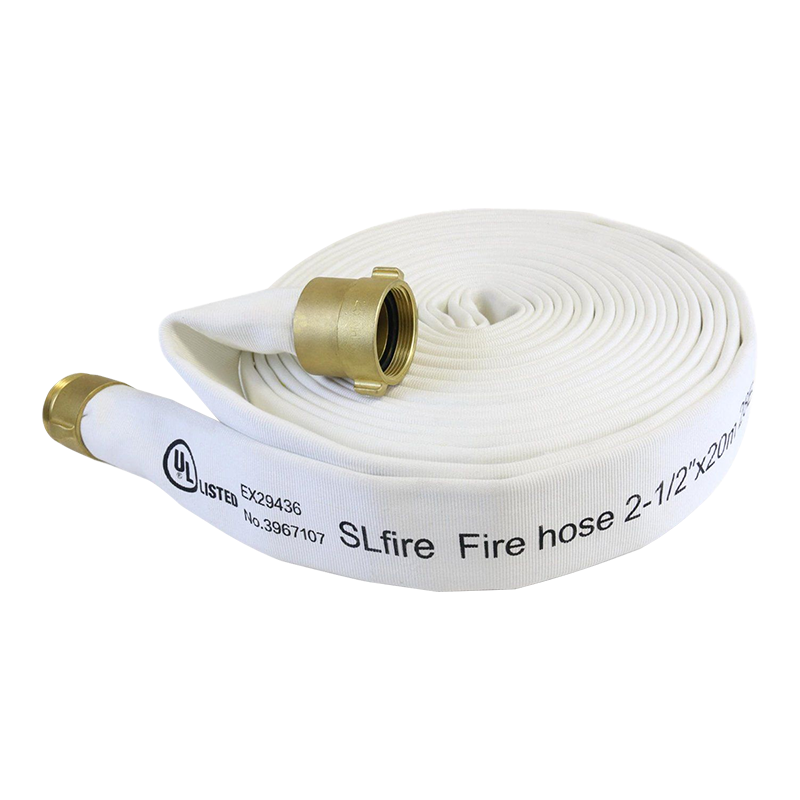
Single jacket, EPDM rubber liner Features • 100% high tenacity polyester jacket, high-grade EPDM rub...
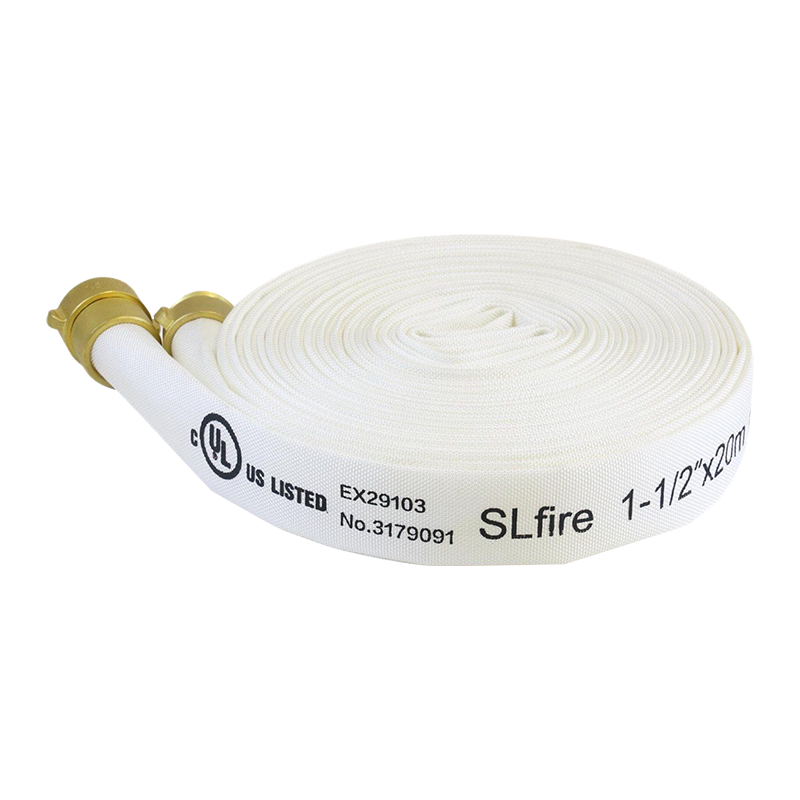
Single jacket, TPU liner •High-tenacity polyester yarn, circular woven in twill weave/plain weave,T ...
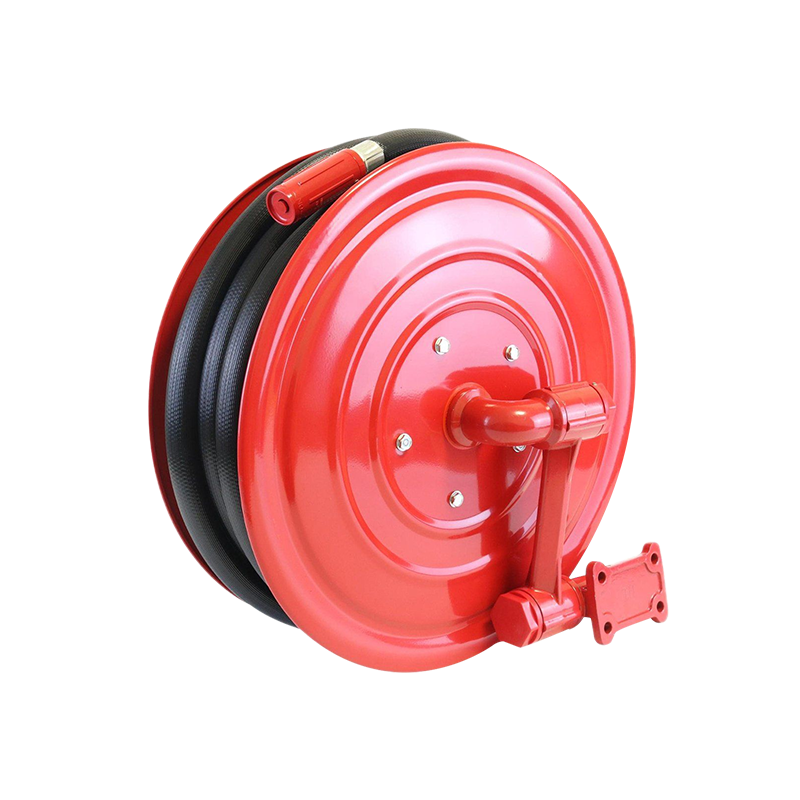
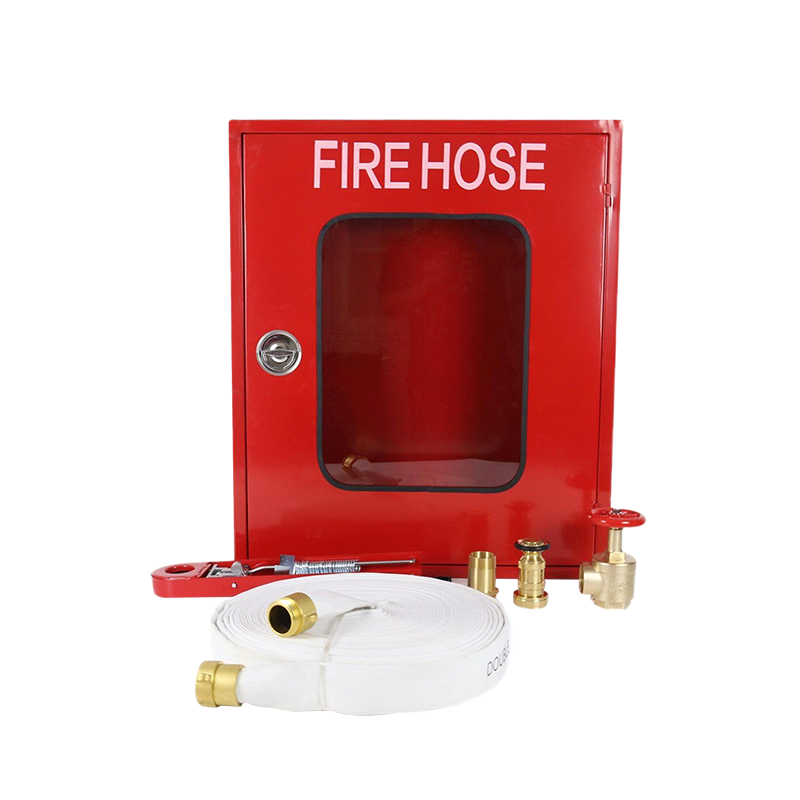
Fire cabinets are designed to accommodate fire hose,valve and other firefighting equipment. Type 201...
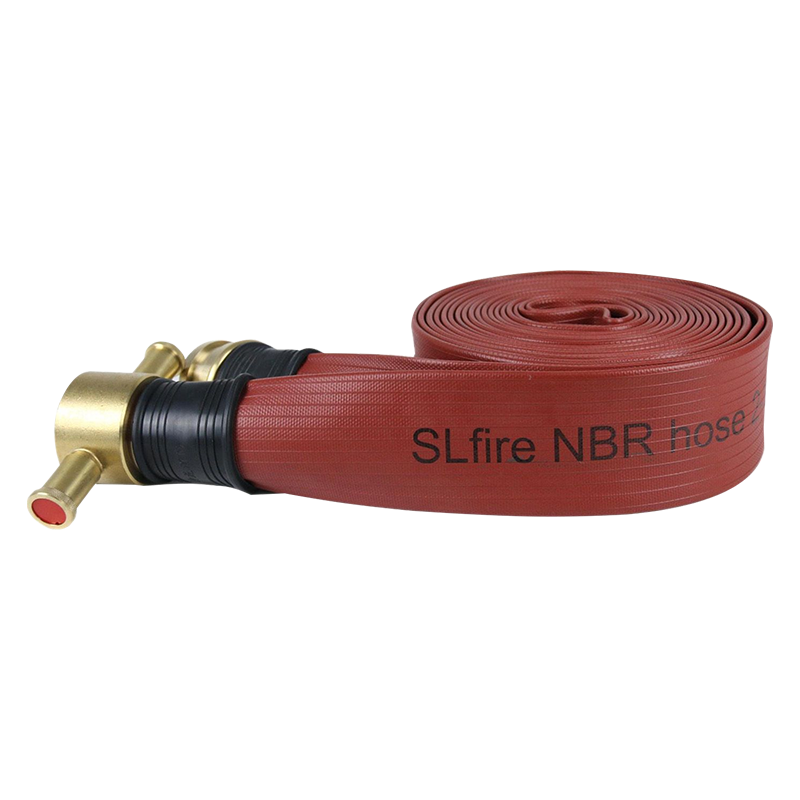
Nitrile covered hose •Nitrile/TPR blend as cover and lining, with 100% high-tenacity polyester yarn ...
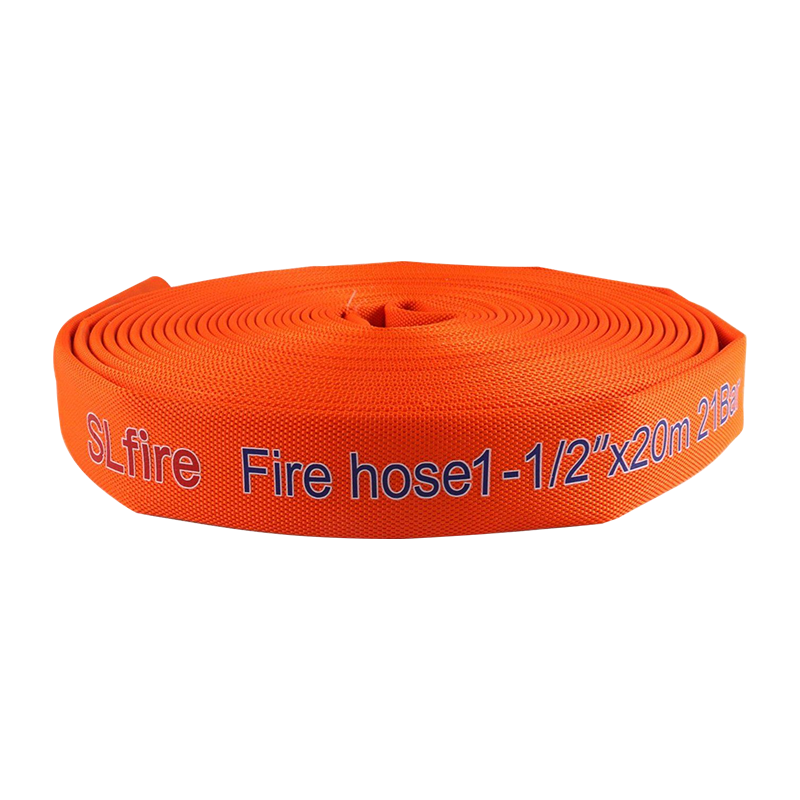
Single jacket, TPU liner •High-tenacity polyester yarn, circular woven in twill weave, TPU lining, f...
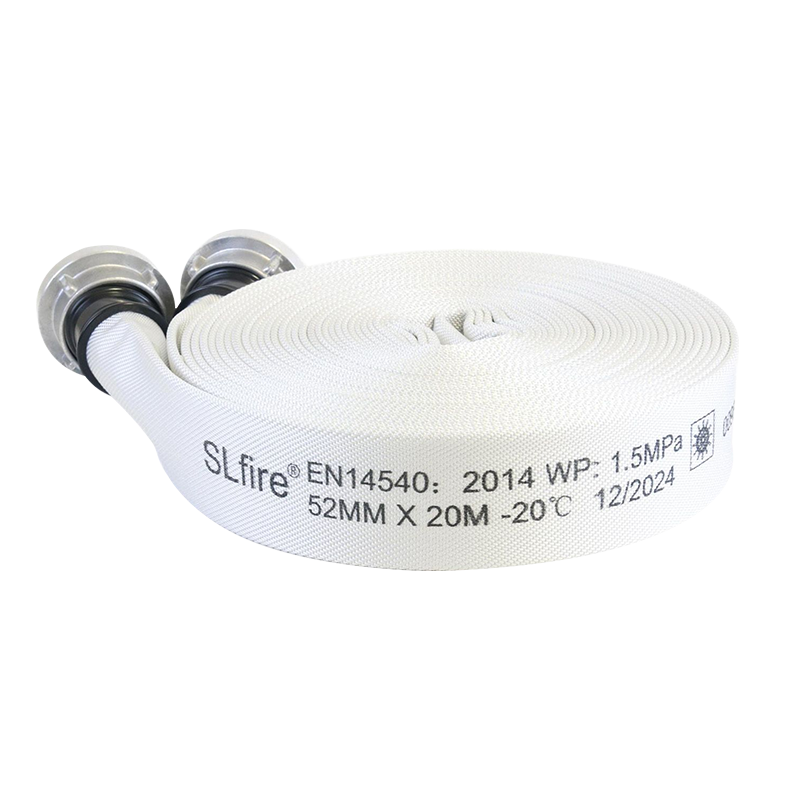
Marine hose Single jacket, PVC liner •100% high tenacity polyester yarn, circular woven in twill wea...
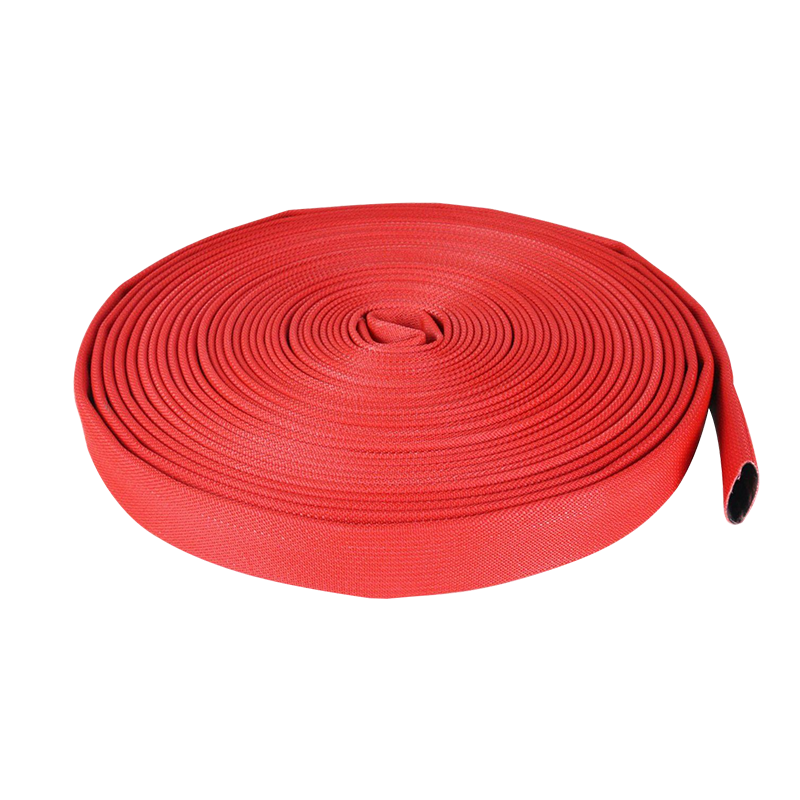
Marine hose Single jacket, PVC liner, PU coated •100% high tenacity polyester yarn,c ircular woven i...
 Call Us
+86 159-5116-9511
Need Support
Head Office
No.58, Kechuang Road, Sixiang Street Medicine Gaoxin District Taizhou City, Jiangsu Province

During a routine service test, a 200-foot attack line fails at 150 psi. The outer jacket looks fine. The problem is inside: a small delamination in the liner has pinched the bore and reduced the flow...
Copyright © Taizhou Shenlong Fire Science and Technology Co., Ltd. All Rights Reserved.
 Fire Hose Manufacturers, Fire Hydrant Hose Factory