

 English
 русский
 Español
 Deutsch
 عربى
عربى Français
 Português
Don't hesitate to send a message
Single jacket, EPDM rubber liner Features • 100% high tenacity polyester jacket, high-grade EPDM rub...
Content
When a fire breaks out, the connection between a water supply and the hose delivering that water to the fire is not a detail — it is a critical link in the suppression chain. A mismatched coupling, a cross-threaded connection, or an adapter that cannot handle operating pressure can cost seconds or minutes that firefighters cannot afford to lose. Understanding fire hose connector types — including the different coupling designs, threading standards, adapter configurations, and material specifications used across different regions and applications — is essential for fire service procurement officers, facility fire safety managers, system designers, and anyone responsible for maintaining firefighting equipment compatibility. This guide covers the subject with the practical depth that the topic demands.
A fire hose coupling serves three simultaneous functions: it connects the hose to a water source, another hose section, or a nozzle; it maintains a watertight seal under the considerable pressure of flowing firefighting water; and it allows rapid connection and disconnection by firefighters wearing gloves, often in darkness, smoke, or extreme heat. Meeting all three requirements simultaneously demands precision engineering and strict dimensional standardization.
The critical importance of standardization cannot be overstated. When mutual aid between fire departments is required — as it frequently is in large-scale incidents — the arriving department must be able to connect its hoses to the fixed installations, hydrants, and apparatus of the host department without adapters or improvisation. Historically, the lack of coupling standardization has been directly responsible for firefighting failures, including the Great Baltimore Fire of 1904, where equipment from neighboring cities could not connect to Baltimore's hydrants, allowing the fire to burn for over 30 hours and destroy more than 1,500 buildings. That disaster was a major catalyst for the standardization efforts that produced many of the coupling systems used today.
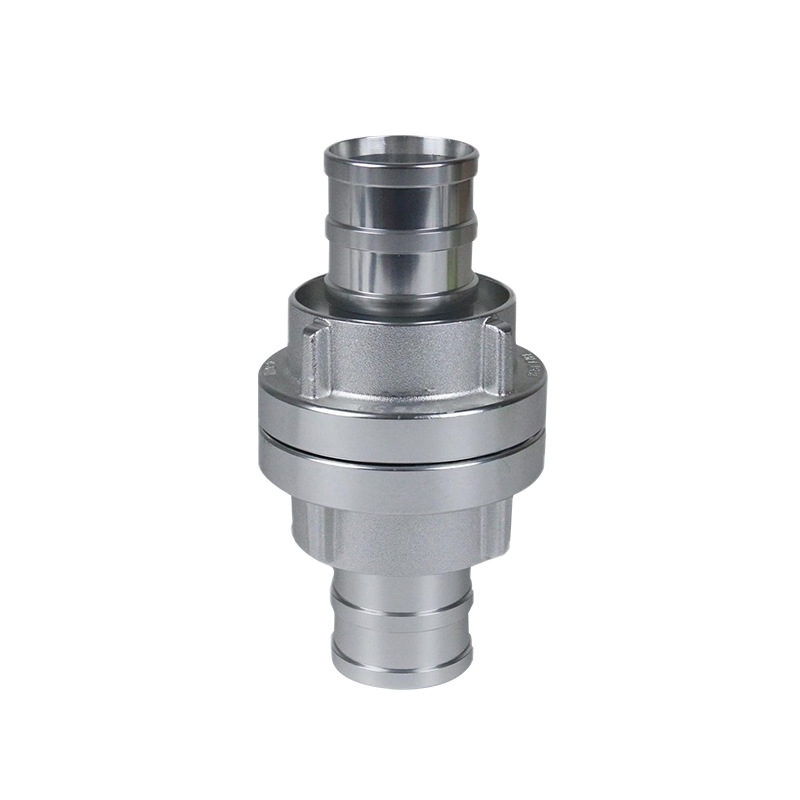
Threaded couplings use a male and female thread form to connect hose sections, nozzles, and fittings. The threads on fire hose couplings are not the same as standard pipe threads — they are specifically designed for rapid assembly, resistance to cross-threading, and reliable sealing under dynamic pressure. The most widely used threaded coupling standard in North America is the National Hose (NH) thread, also known as National Standard Thread (NST), standardized under NFPA 1963. NH thread has a coarser pitch than National Pipe Thread (NPT), which reduces the number of turns required to fully engage the coupling and makes connection faster under field conditions. The thread is also slightly rounded at the crest and root to resist damage and reduce the risk of cross-threading when couplings are joined quickly.
In the United Kingdom, British Standard Pipe (BSP) threads are used on some legacy installations and industrial fire systems, but the dominant standard for operational fire hose is the instantaneous coupling described below. In Germany and much of continental Europe, the Storz coupling (also described below) has almost entirely replaced threaded connections in the fire service. Thread compatibility between these systems requires adapters, and maintaining a stock of appropriate adapters on apparatus and at fixed installations is standard practice wherever equipment from different standards may be combined.
The Storz coupling, developed in Germany in the late 19th century and now standardized under DIN 14307, is a symmetrical half-turn coupling in which both halves of the connection are identical — there is no distinction between male and female ends. Two lugs on each coupling half engage slots on the mating half and are locked by a quarter-turn rotation, compressing an internal gasket to form a watertight seal. The symmetrical design eliminates the need to orient the coupling before connection, significantly speeding up hose laying and reducing errors under operational conditions.
Storz couplings are dominant in German-speaking countries, Scandinavia, much of continental Europe, and are increasingly used internationally for suction hose connections on fire apparatus worldwide. They are available in nominal sizes from 25 mm to 150 mm, with the most common operational sizes being 52 mm (used for attack hose), 75 mm (supply line), and 110 mm (large diameter supply and suction). A key limitation is that Storz couplings require both ends to be compatible Storz fittings — they cannot connect directly to threaded or instantaneous couplings without an adapter.
Instantaneous couplings, widely used in the United Kingdom, Australia, and New Zealand, use a series of projecting lugs on the male half that engage corresponding recesses on the female half and lock with a quarter-turn — similar in principle to a bayonet fitting. The connection is made in a single rapid motion and is secured by spring-loaded retention that resists accidental disconnection under pressure. UK instantaneous couplings are standardized under BS 336, which defines dimensions for nominal sizes from 45 mm to 70 mm, covering the most common attack and supply hose diameters used by UK fire and rescue services.
Australian instantaneous couplings follow AS 2441, which defines similar lug-and-socket geometry but with dimensional differences from the UK standard — meaning that UK and Australian instantaneous couplings of the same nominal size are not directly compatible without adapters. This is a frequently encountered source of incompatibility in countries where equipment is sourced from both markets, and facilities managers in regions that import fire equipment from multiple origins should verify coupling standard compatibility at the procurement stage.
Camlock couplings — also called cam-and-groove couplings — use a female adapter with two cam arms that lock over corresponding grooves on a male adapter when the arms are pressed down. They are widely used in industrial firefighting, foam system pipework, and tanker truck connections, but are less common in municipal fire service hose applications due to their susceptibility to accidental release if the cam arms are struck or catch on obstacles during hose deployment. Camlock couplings conform to MIL-C-27487 or the equivalent EN 14420-7 standard and are available in sizes from ½ inch to 6 inches, typically with NPT, BSP, or plain hose shank connections.
Threading standards for fire hose and hydrant connections vary significantly between countries and even between regions within countries. The table below summarizes the primary threading and coupling standards in major markets to assist with compatibility planning:
| Region / Country | Primary Coupling Standard | Governing Standard | Connection Type |
| USA / Canada | National Hose (NH/NST) | NFPA 1963 | Threaded (male/female) |
| Germany / Central Europe | Storz | DIN 14307 | Symmetrical half-turn |
| United Kingdom | BS Instantaneous | BS 336 | Quarter-turn lug |
| Australia / New Zealand | AU Instantaneous | AS 2441 | Quarter-turn lug |
| France | DSP (French instantaneous) | NF S61-702 | Quarter-turn lug |
| Japan | Japanese fire hose coupling | JIS B 9910 | Threaded (coarse pitch) |
Wherever fire systems or equipment from different coupling standards must be interconnected, adapters are required. A fire hose adapter is a short fitting with one coupling type on each end, permanently bridging the two standards. Adapters are available for virtually every combination of coupling types encountered in operational firefighting, and maintaining an appropriate set on fire apparatus and at fixed installations is considered standard practice in any location where mutual aid or imported equipment creates compatibility requirements.
Common adapter combinations include NH male to Storz female (for US apparatus connecting to European hydrants), BS instantaneous male to NH female (for UK hose connecting to US appliances), and Storz to BSP thread (for connecting Storz hose lines to threaded industrial fittings or standpipe outlets). Adapters are rated for the same operating pressures as the couplings they connect and should carry certification marks confirming pressure testing and dimensional compliance with the relevant standards on both ends.
Reducing adapters — which connect a larger coupling to a smaller one — are used when different hose diameter lines must be joined, for example when a large-diameter supply line (100 mm or 110 mm) must feed a smaller attack line (52 mm or 65 mm). These adapters must be carefully selected to ensure that the flow restriction at the reduction point does not cause unacceptable pressure drop in the hose system, particularly where flow rates are high and nozzle pressure requirements are tight.
The material from which a fire hose coupling is manufactured directly affects its weight, corrosion resistance, mechanical strength, and service life. The three primary materials used in fire service couplings each have specific advantages and limitations:
A fire hose coupling is only as watertight as its gasket. The gasket — a compressible ring seated in the female half of the coupling — provides the pressure seal when the coupling is connected and pressurized. Gasket material must be compatible with the water or foam solution being used, must maintain its seal under the shock and vibration of firefighting operations, and must not deteriorate with age, UV exposure, or ozone exposure to the point where it fails under pressure.
EPDM (ethylene propylene diene monomer) rubber is the standard gasket material for most fire hose couplings due to its excellent resistance to water, weathering, UV, and ozone, and its ability to maintain flexibility across a wide temperature range from −40°C to +120°C. NBR (nitrile) rubber gaskets are used where the hose will carry foam concentrate or foam premix solutions, as NBR has superior resistance to hydrocarbon-based foam agents that would cause EPDM to swell and degrade. Gaskets should be inspected at every hose inspection interval and replaced immediately if any cracking, deformation, hardening, or compression set is visible — a failed gasket under firefighting pressure can cause a coupling to blow apart with potentially fatal consequences.
For fire safety managers, apparatus officers, and system specifiers, the following practical guidelines summarize the key decisions and maintenance requirements for fire hose couplings and adapters:
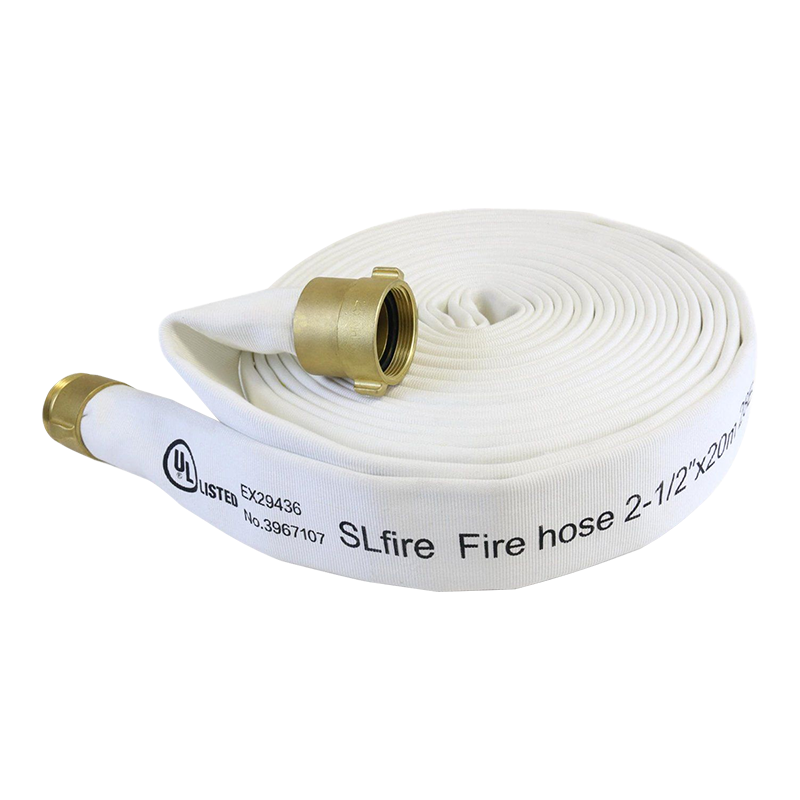
Single jacket, EPDM rubber liner Features • 100% high tenacity polyester jacket, high-grade EPDM rub...
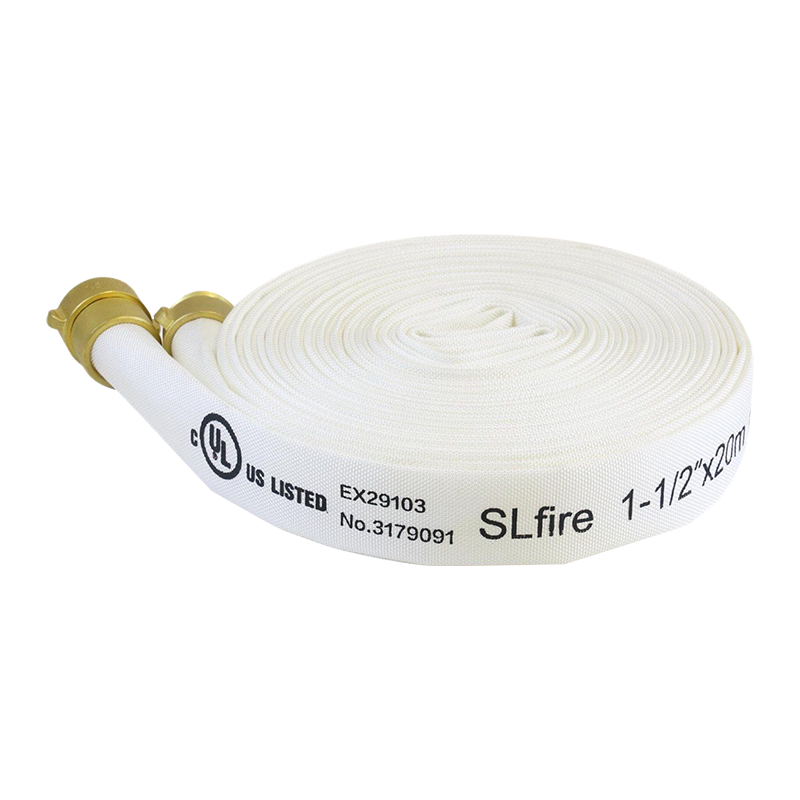
Single jacket, TPU liner •High-tenacity polyester yarn, circular woven in twill weave/plain weave,T ...
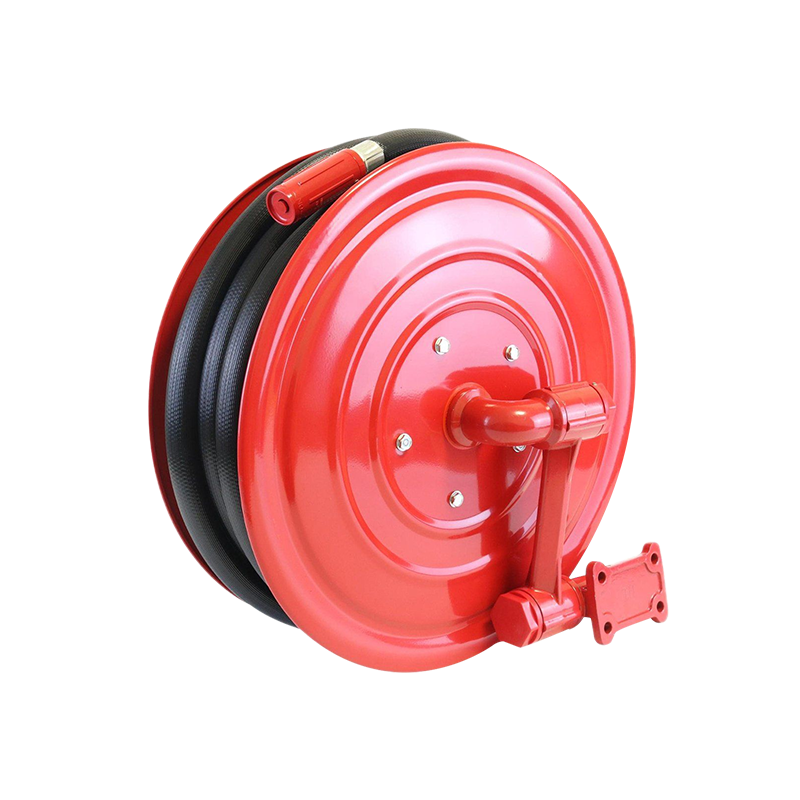
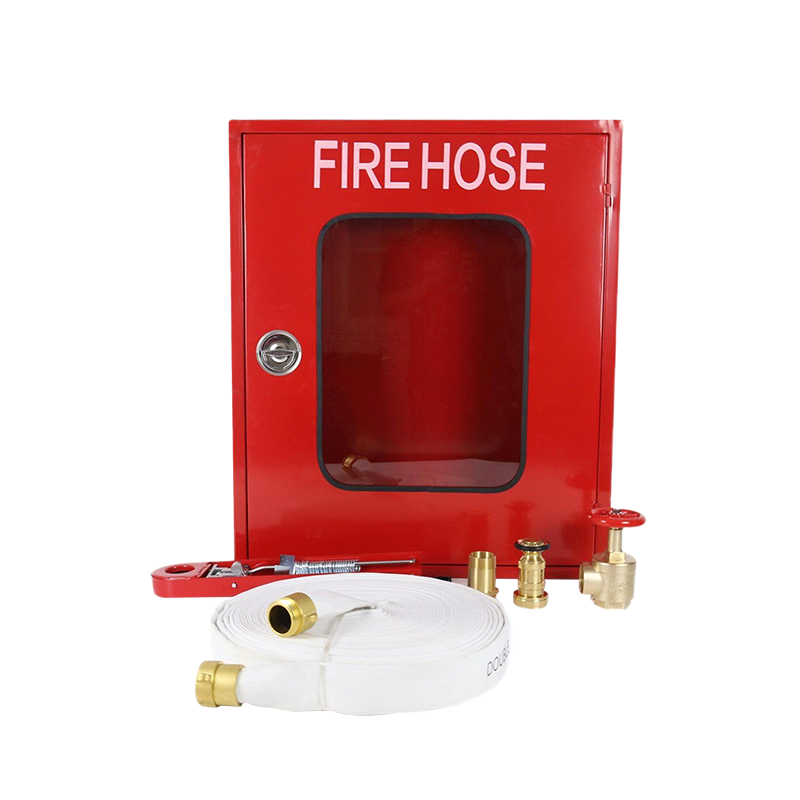
Fire cabinets are designed to accommodate fire hose,valve and other firefighting equipment. Type 201...
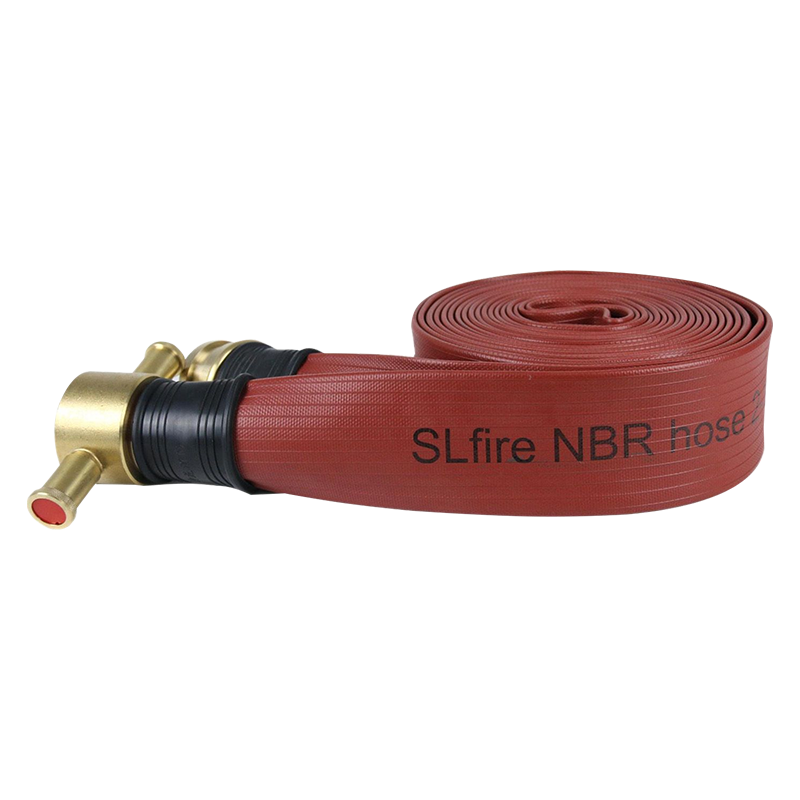
Nitrile covered hose •Nitrile/TPR blend as cover and lining, with 100% high-tenacity polyester yarn ...
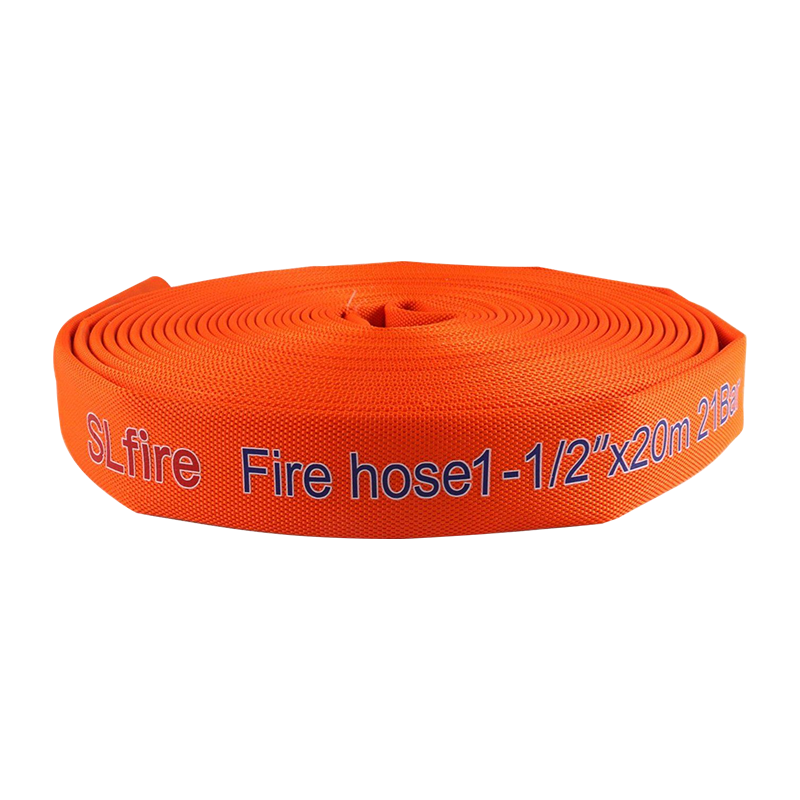
Single jacket, TPU liner •High-tenacity polyester yarn, circular woven in twill weave, TPU lining, f...
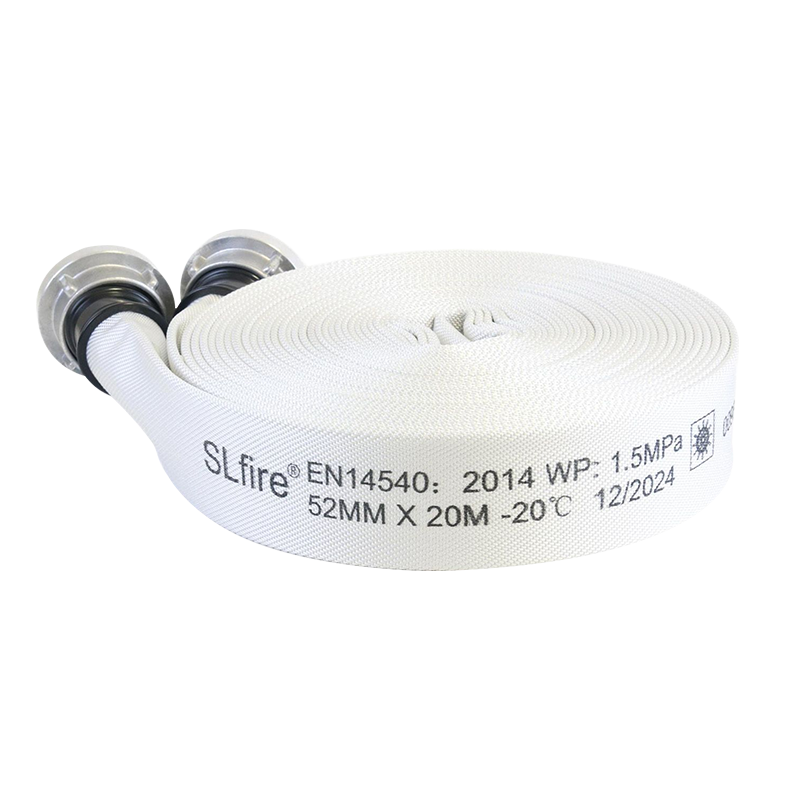
Marine hose Single jacket, PVC liner •100% high tenacity polyester yarn, circular woven in twill wea...
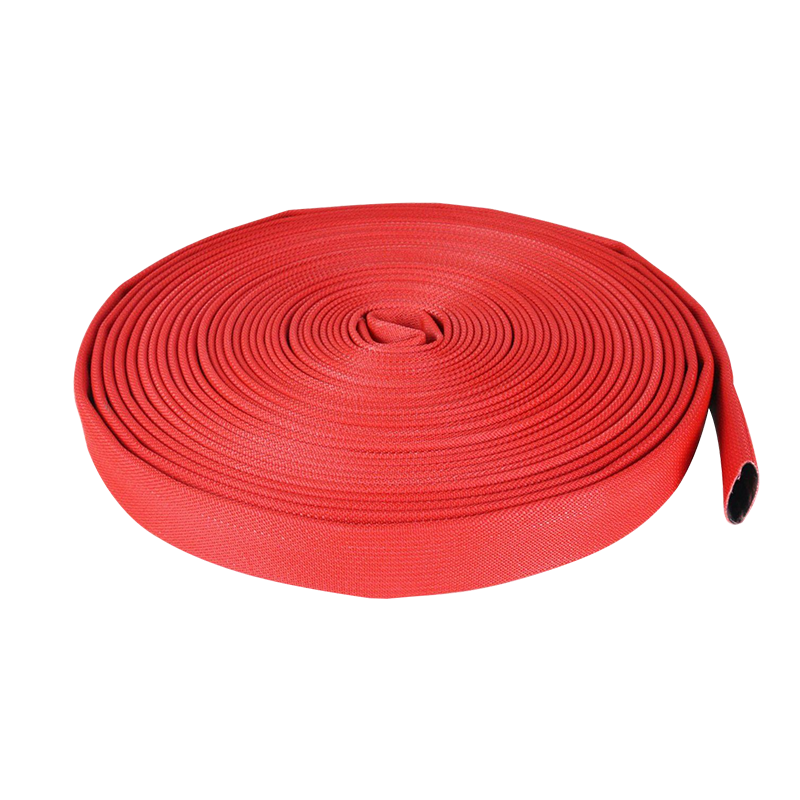
Marine hose Single jacket, PVC liner, PU coated •100% high tenacity polyester yarn,c ircular woven i...
 Call Us
+86 159-5116-9511
Need Support
Head Office
No.58, Kechuang Road, Sixiang Street Medicine Gaoxin District Taizhou City, Jiangsu Province

During a routine service test, a 200-foot attack line fails at 150 psi. The outer jacket looks fine. The problem is inside: a small delamination in the liner has pinched the bore and reduced the flow...
Copyright © Taizhou Shenlong Fire Science and Technology Co., Ltd. All Rights Reserved.
 Fire Hose Manufacturers, Fire Hydrant Hose Factory