

 English
 русский
 Español
 Deutsch
 عربى
عربى Français
 Português
Don't hesitate to send a message
Single jacket, EPDM rubber liner Features • 100% high tenacity polyester jacket, high-grade EPDM rub...
Content
A crew stretching an attack line into a burning structure makes a choice before the nozzle is even opened: what type of nozzle is on the end of the hose. A smooth bore with a fixed tip delivers a solid, penetrating stream. A fog nozzle can be switched from a straight stream to a wide protective pattern at the twist of the barrel. That difference changes how the pump is set, how much water the line moves, and how much heat the stream absorbs.
There is no single best nozzle type. Fire hose nozzle types are designed around real trade-offs between reach, flow, nozzle pressure, and pattern flexibility. This guide explains the main types, how their operating characteristics differ, and what to check before selecting a nozzle for an attack line, a supply line, or an industrial reel.
Every fire nozzle is defined by three operating values: flow, nozzle pressure, and stream shape. Flow is the volume of water discharged per minute, normally expressed in gallons per minute (gpm) or liters per minute (lpm). Nozzle pressure is the pressure measured at the nozzle inlet, not the pump discharge pressure. It gives the stream its velocity and, together with the orifice geometry, determines reach and penetration. Stream shape is the pattern of the water leaving the nozzle, from a solid column to a wide fog cone.
These values work together. At a fixed nozzle pressure, a larger orifice moves more water; at a fixed orifice, higher pressure increases flow. This is why a nozzle type cannot be changed without also resetting the pump discharge pressure. Anyone who wants to understand how pressure and flow behave through the whole hose lay should review how fire hoses maintain their pressure during firefighting operations, because friction loss and elevation change the pressure the nozzle actually sees.
Fire hose nozzles fall into four broad categories: smooth bore, constant or selectable gallonage fog, automatic constant pressure, and basic adjustable-pattern nozzles. Each has a distinct operating logic, and each fits a different tactical role.
A smooth bore nozzle uses a fixed round opening machined into a metal tip. Water leaves as a solid column that holds its shape and velocity over distance. At the usual operating pressure of about 50 psi, a smooth bore produces excellent reach and penetration with a moderate nozzle reaction, so the line is easier to handle. The trade-off is that there is no fog pattern. Flow is locked to the tip diameter: a 15/16-inch tip at 50 psi discharges roughly 185 gpm, so the pump operator must supply the rated flow for the installed tip, and the nozzle operator must accept that the stream cannot be widened for heat protection.
Fog nozzles break the stream into droplets by passing it over a set of teeth machined into the flow tip. Those teeth create turbulence that shreds the solid stream into a cone of drops. A constant gallonage fog nozzle discharges a fixed flow, typically rated at 100 psi, while allowing the operator to change the pattern from straight stream to wide fog. A selectable gallonage nozzle adds a flow control ring so the operator can choose between settings such as 95, 125, 150, or 200 gpm at the same rated pressure. Fog patterns are valuable in interior attack: a wide fog absorbs heat quickly and protects the crew, while a straight or narrow stream gives more reach when the fire is remote from the doorway.
Automatic nozzles contain a spring-loaded baffle that opens or closes the orifice as the supply flow changes. The result is a nearly constant nozzle pressure across a wide flow range. If the pump pressure rises or more water arrives at the nozzle, the baffle opens and discharges more water at roughly the same pressure. This design protects firefighters from sudden pressure spikes and simplifies pump operation, which is why automatic nozzles are common on large-diameter supply lines and in mutual aid situations where the water supply is unpredictable.
Basic nozzles are the simplest design: a manually adjustable barrel with no internal flow regulation. They are widely used on industrial reels, marine deck hoses, and interior standpipe cabinets, where the operator needs a quick straight-stream-to-fog adjustment and does not require precise gallonage control. Because the internal construction is simple, basic nozzles tend to be lighter, easier to service, and less expensive than automatic or selectable gallonage designs.
| Nozzle type | Flow behavior | Typical nozzle pressure | Stream options | Common application |
|---|---|---|---|---|
| Smooth bore | Fixed by tip size | 50 psi (3.4 bar) | Solid stream only | Attack lines, heavy penetration, exterior streams |
| Constant gallonage fog | Fixed flow | 100 psi (6.9 bar) | Straight stream to wide fog | Interior attack, crew heat shielding |
| Selectable gallonage fog | Operator selected | 100 psi (6.9 bar) | Straight stream to wide fog | Versatile attack lines |
| Automatic constant pressure | Self-adjusting with supply flow | Constant around 100 psi | Straight stream to wide fog | Variable water supply, large-diameter lines |
| Basic adjustable pattern | No regulation | Depends on pump pressure | Adjustable straight to fog | Industrial reels, marine hose, standpipe cabinets |
The spray pattern is not a cosmetic feature; it changes how water works on the fire. A straight stream is a compact, high-velocity column that travels long distances and drives deep into a fire compartment. It is the right choice for reaching an attic fire, punching through a ceiling, or delivering water from a safe distance outside a window. A fog pattern breaks water into droplets with a large combined surface area. Those droplets absorb heat rapidly and turn to steam, which displaces oxygen and cools the fire gases. A wide fog angled above the crew is a standard defense for advancing down a hot corridor.
A narrow fog is a middle ground: it still absorbs heat but retains more reach than a wide pattern. On most fog nozzles, the pattern is changed by rotating the barrel, not by adjusting the flow. Departments that need one handline to cover several jobs often choose a multipurpose design with a pistol grip and integrated shutoff, such as a pistol-grip multipurpose fire hose nozzle, which allows the operator to switch between attack and overhaul without swapping equipment.
A nozzle is only useful if it connects to the hose. Two factors control that connection: inlet diameter and thread standard. Handline nozzles typically have 1.5-inch, 2-inch, or 2.5-inch inlets; master stream nozzles use 2.5-inch or 3-inch inlets. The thread standard is regional. The United States commonly uses NST/NH threads. Germany and much of Central Europe use Storz, a quarter-turn sexless coupling with no male or female side. The United Kingdom uses John Morris threads, Japan uses Machino, and Russia, France, and Italy each have their own standards. A nozzle with the wrong threads will not seal, and adapters add weight and another potential leak point.
Coupling compatibility also depends on clean threads and undamaged gaskets. Even a matching set of threads leaks if the gasket is worn or the faces are scored, so inspect threads and gaskets every time the nozzle is connected.
For departments using Storz couplings, Storz fire hose nozzles in 1.5-, 2-, 2.5-, and 3-inch inlet sizes cover handline and master stream applications without adapters. For UK-standard equipment, a John Morris hose nozzle matches the threads found on British-style hose and couplings.
Start with the water supply and the hose, not the nozzle. A 1.75-inch attack line at 200 feet needs a different flow and pressure than a 2.5-inch supply line feeding a master stream. The choice should consider five things: flow needed to extinguish the expected fire load, pump capacity and pressure, hose diameter and friction loss, the thread standard already in use, and the crew's ability to handle nozzle reaction.
Nozzle selection is a system decision. Once the flow, pressure, and pattern are set, the nozzle type falls into place, and the hose, pump, and fittings all work from the same numbers.
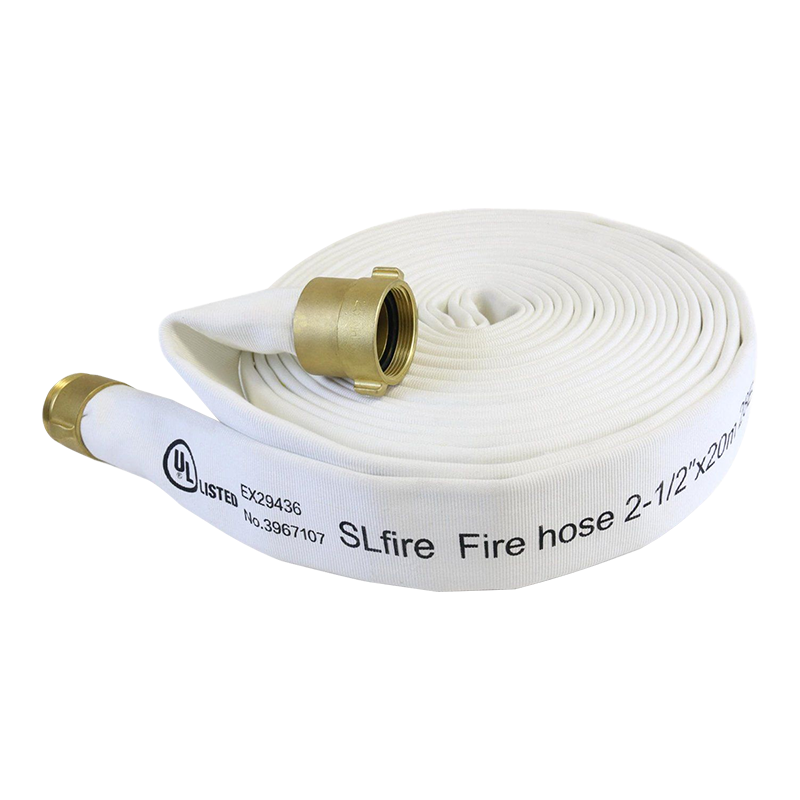
Single jacket, EPDM rubber liner Features • 100% high tenacity polyester jacket, high-grade EPDM rub...
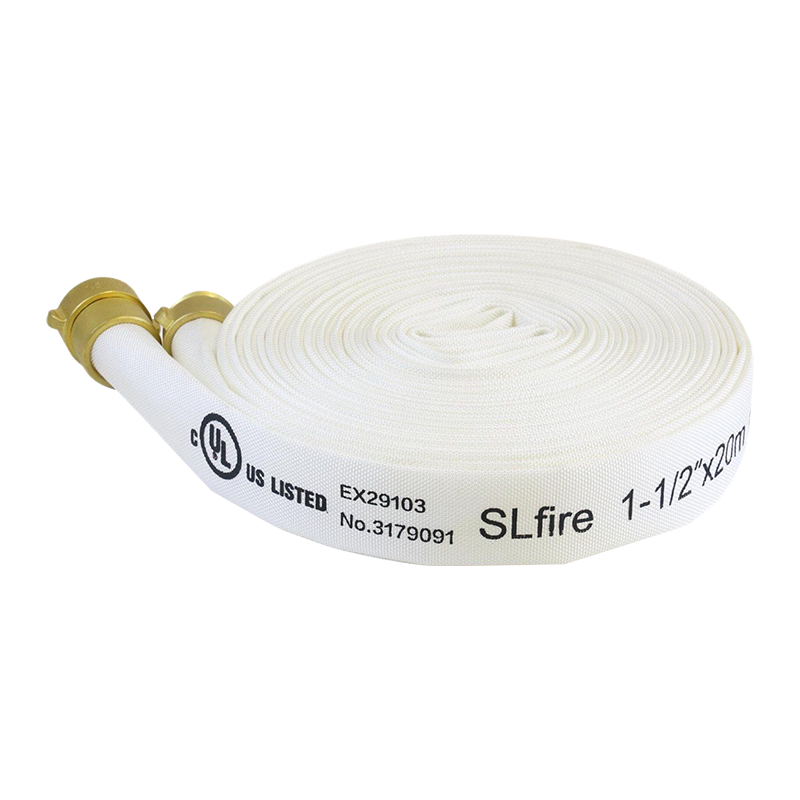
Single jacket, TPU liner •High-tenacity polyester yarn, circular woven in twill weave/plain weave,T ...
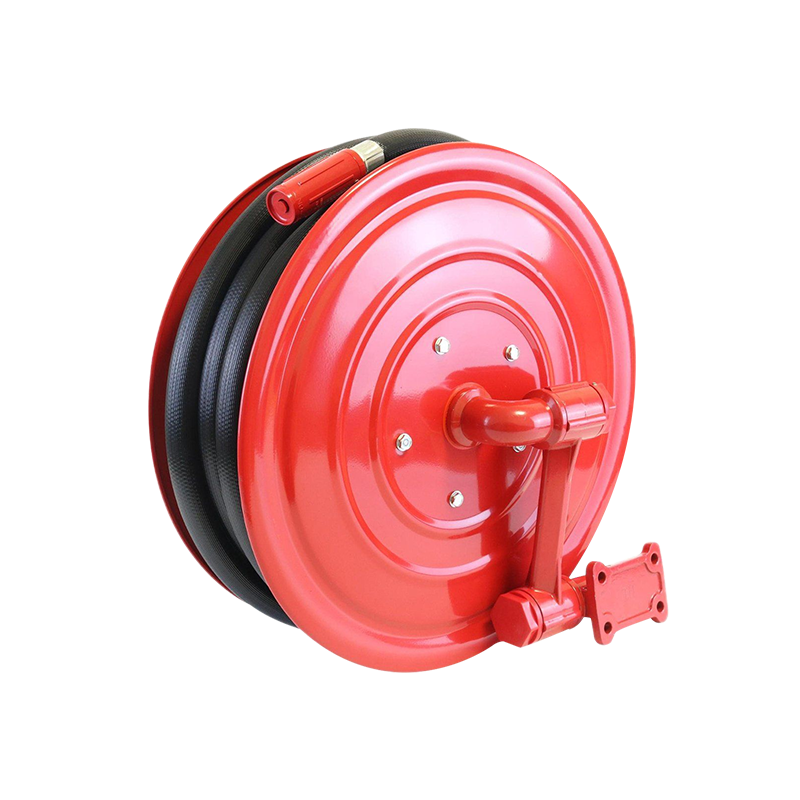
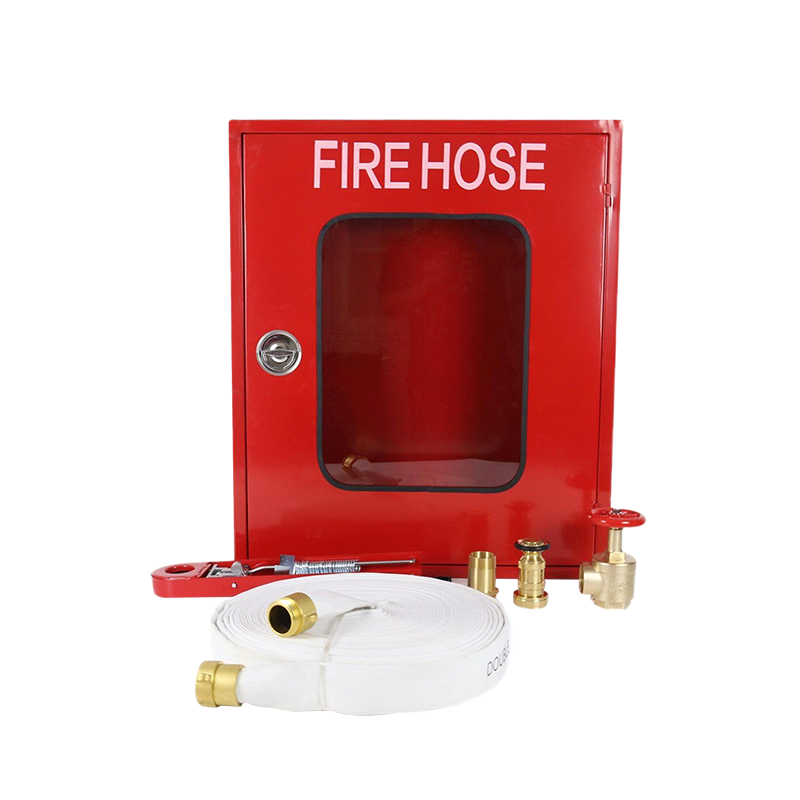
Fire cabinets are designed to accommodate fire hose,valve and other firefighting equipment. Type 201...
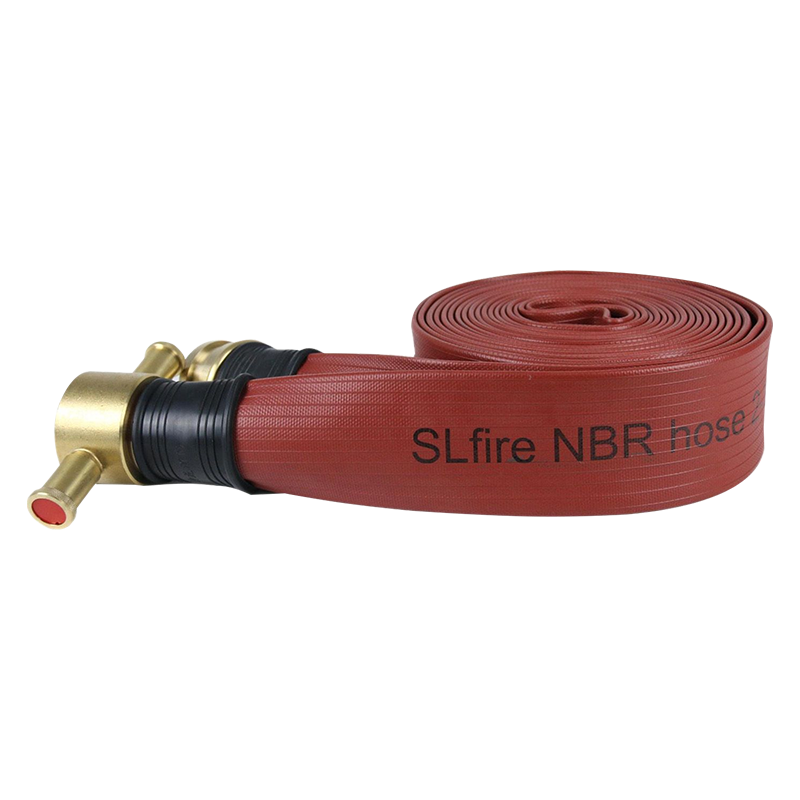
Nitrile covered hose •Nitrile/TPR blend as cover and lining, with 100% high-tenacity polyester yarn ...
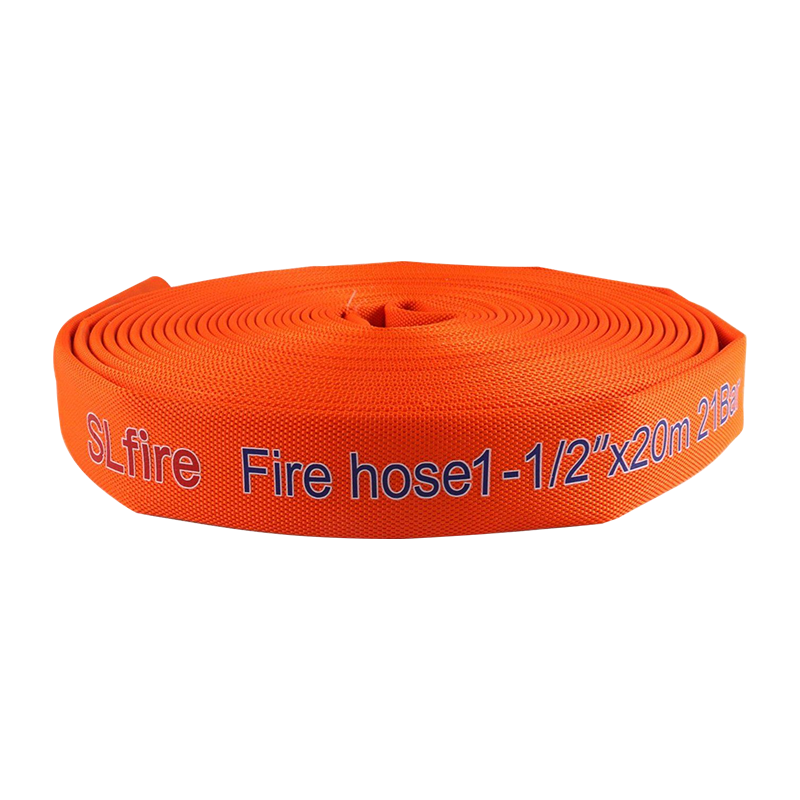
Single jacket, TPU liner •High-tenacity polyester yarn, circular woven in twill weave, TPU lining, f...
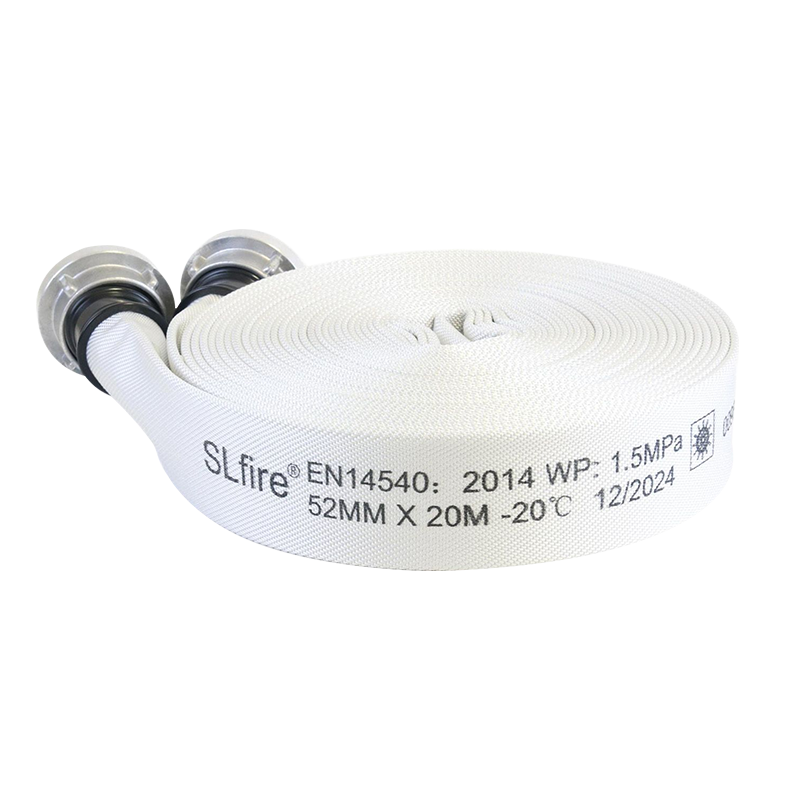
Marine hose Single jacket, PVC liner •100% high tenacity polyester yarn, circular woven in twill wea...
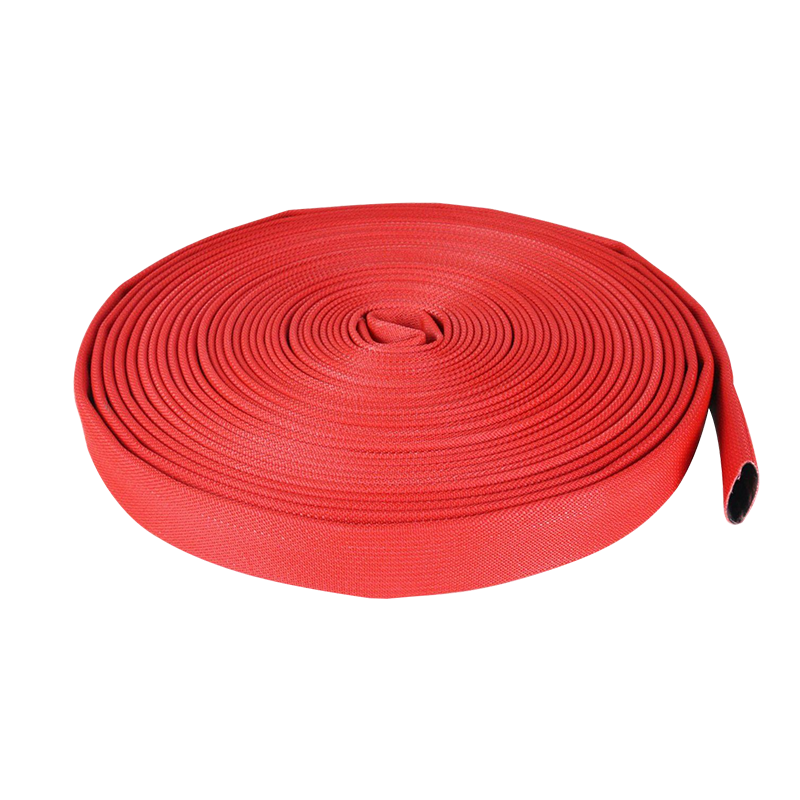
Marine hose Single jacket, PVC liner, PU coated •100% high tenacity polyester yarn,c ircular woven i...
 Call Us
+86 159-5116-9511
Need Support
Head Office
No.58, Kechuang Road, Sixiang Street Medicine Gaoxin District Taizhou City, Jiangsu Province

A crew stretching an attack line into a burning structure makes a choice before the nozzle is even opened: what type of nozzle is on the end of the hose. A smooth bore with a fixed tip delivers a sol...
Copyright © Taizhou Shenlong Fire Science and Technology Co., Ltd. All Rights Reserved.
 Fire Hose Manufacturers, Fire Hydrant Hose Factory