

 English
 русский
 Español
 Deutsch
 عربى
عربى Français
 Português
Don't hesitate to send a message
Single jacket, EPDM rubber liner Features • 100% high tenacity polyester jacket, high-grade EPDM rub...
Content
During a routine service test, a 200-foot attack line fails at 150 psi. The outer jacket looks fine. The problem is inside: a small delamination in the liner has pinched the bore and reduced the flow. Two bays away, a supply hose passes its pressure test, but its coupling spins freely and leaks at the threads whenever the line is charged. These are the everyday failure points of fire hose, and they trace directly to the three main parts of a fire hose: the inner liner, the jacket, and the couplings.
Every fire hose, regardless of diameter or intended use, is built around the same three-part structure.
A fourth component appears in practice: the nozzle. The nozzle is technically an appliance, but it completes the delivery end and shapes the pressurized water into a useful stream. In a complete hose assembly, the nozzle is as much a part of the system as the liner, so it belongs in any discussion of fire hose components.
The liner is the only barrier between the pumped water and the outer jacket. If the liner fails, water seeps into the jacket, the hose becomes heavy and difficult to drag, and the pressure at the nozzle drops. Liner material is therefore the first specification to consider.
EPDM (ethylene propylene diene monomer) is one of the most common liner materials in fire hose. It resists ozone and weathering, handles a wide temperature range, and stays flexible in cold conditions. Attack and supply hose with EPDM liners are a proven combination for municipal fire service.
TPU is lighter than rubber and has excellent low-temperature flexibility. It also resists hydrolysis, which is an advantage in humid storage conditions. Forestry and rugged-terrain hose frequently use TPU liners because they remain pliable in the field.
Polyvinyl chloride is the economical option. It has a smooth bore with low friction loss, but it stiffens when temperatures drop. PVC liners are common in marine and industrial hose where temperature extremes are less of a factor.
Nitrile rubber resists oils, fuels, and selected chemicals, making it a practical choice for industrial and mill hose that may come into contact with petroleum products.
| Material | Flexibility | Abrasion Resistance | Cold Weather Behavior | Typical Applications |
|---|---|---|---|---|
| EPDM rubber | Good | Good | Good | Attack, supply, marine, mill |
| TPU | Excellent | Excellent | Excellent | Forestry, attack, snowmaking |
| PVC | Moderate | Moderate | Poor in extreme cold | Marine, industrial, budget hose |
| NBR | Good | Good | Moderate | Oil-resistant, mill service |
The right liner matches the climate and the water quality. A department that works in sub-zero winters should not buy a hose with a PVC liner; a mill operation that handles diesel fuel needs NBR or a fully covered hose. Liner selection is the first decision, and it narrows the choices for everything else.
Once the liner is chosen, the next question is how much external abuse the hose will absorb. The jacket does the physical work.
Single jacket hose has one woven layer around the liner. It is lighter, compacts into a smaller space, and is faster to advance and redeploy. This makes it the standard choice for interior attack, where speed matters and the floor is less punishing than the street. Many departments run a single-jacket TPU liner attack hose on preconnected lines because it stays flexible in cold weather and handles daily training without developing soft spots.
For crews that want a proven configuration, a single-jacket TPU liner attack hose offers the best combination of low weight, high flexibility, and dependable pressure performance.
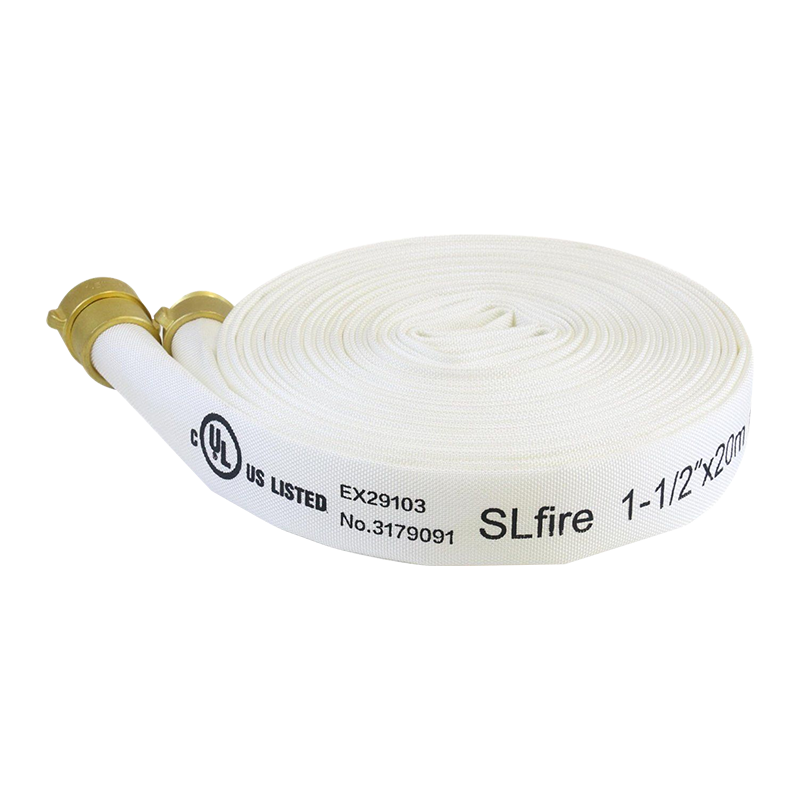 TPU Lined Fire Hose Suppliers,TPU Liner Attack Hose CompanyShenlong is China Custom TPU Lined Fire Hose Suppliers,Single Jacket TPU Liner Attack Hose Company, supply TPU Lined Fire Hose, Single Ja...View Product →
Double jacket hose wraps the liner in two woven layers. The second layer adds puncture resistance, protects the liner when the hose is dragged over rubble and asphalt, and supports higher working pressures. Supply hose, mill discharge hose, and other large-diameter lines are almost always double jacket because they are dragged across the ground and used at high flow rates.
Covered hose takes protection one step further: a synthetic rubber cover, such as nitrile, is applied over the jacket. Mining and heavy industrial operations use covered hose because the rubber coating resists oil, sparks, and impact that would quickly wear through a woven jacket.
Every length of fire hose has a male coupling on one end and a female coupling on the other. That arrangement lets any two lengths be connected, lets the female end attach to a hydrant or pump discharge, and lets the male end attach to a nozzle or another appliance.
Couplings are made from aluminum alloy or brass. Aluminum is lighter and keeps the total weight of a preconnected line down, but it dents and wears faster. Brass is heavier and more expensive, but it resists corrosion, tolerates repeated assembly and disassembly, and can be rethreaded if damaged. Many departments specify brass on large-diameter supply hose because that is where the heaviest mechanical abuse occurs.
Threaded couplings screw together at every connection. They remain the standard in industrial systems and in many parts of the world. Quick-connect couplings, typified by Storz fittings, lock with a quarter turn and a positive latch. Quick-connect is faster to operate in darkness, in heavy gloves, and under stress, which is why modern municipal fire services have largely adopted it for attack and supply lines.
A practical issue that catches buyers off guard: coupling standards vary by country. A hose built for the German market uses Storz fittings; a hose for the British market uses John Morris couplings; a hose for the United States uses National Standard threads; and a hose for the Japanese market uses Machino or Nakajima couplings. If you source hoses from one country and appliances from another, the fittings may not match. That is why a manufacturer coupling range matters as much as the hose itself. For example, properly specified American-style hose couplings are essential for compatibility with existing hydrant hardware in North American systems.
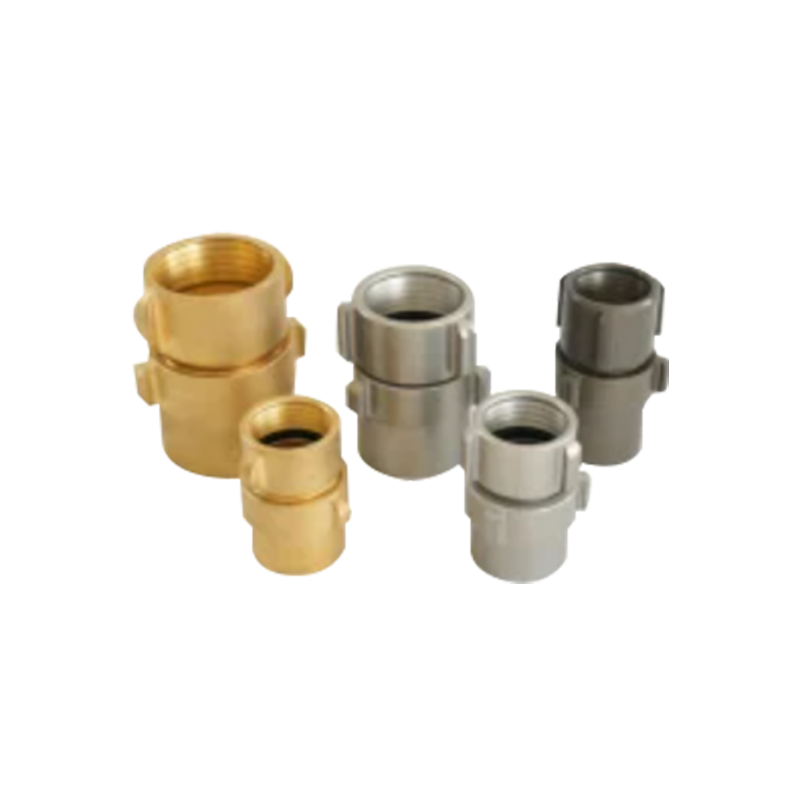 16Bar Working pressure American Hose Couplings Suppliers, CompanyTaizhou Shenlong Fire Science and Technology Co., Ltd is China Custom 16Bar Working pressure American Hose Couplings Suppliers and 16Bar ...View Product →
The nozzle determines reach, flow, and pattern. It converts pump pressure into a stream that can be directed at the fire, so the nozzle must match the hose diameter and the pump delivery curve.
If the nozzle is oversized for the hose, pressure drops and the stream falls short. If it is undersized, the pump deadheads and the engine runs inefficiently. A nozzle rated for the same flow as the hose is the correct match. A robust American hose nozzle with a 2 to 2.5 inch inlet covers the flow range of typical 2.5-inch attack and supply lines, whether the crew runs a straight stream or a wide fog.
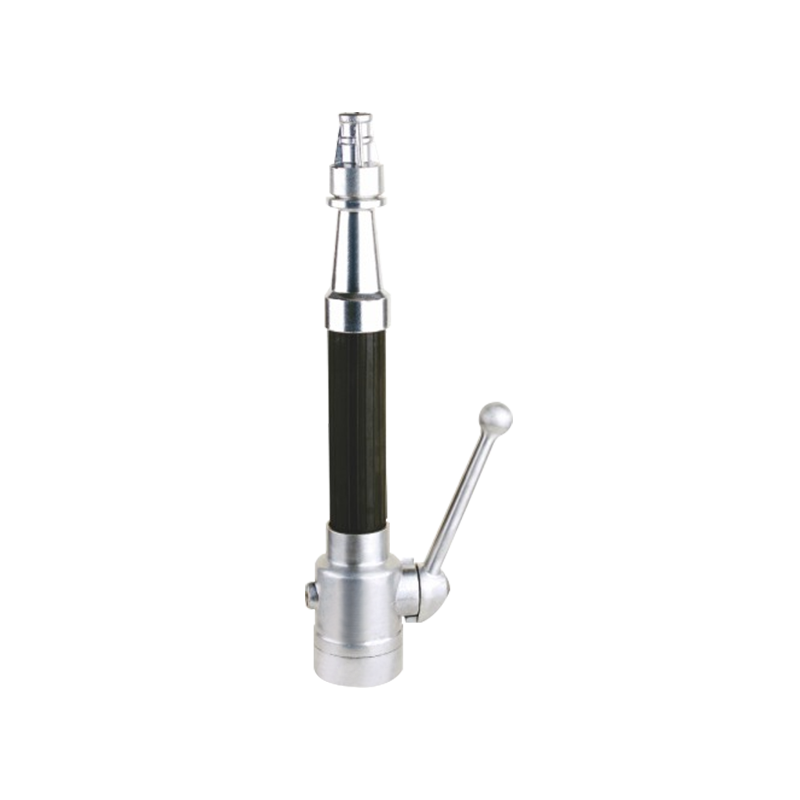 2" 2.5" AMERICAN Hose Nozzle Suppliers, CompanyTaizhou Shenlong Fire Science and Technology Co., Ltd is China Custom 2View Product →
When you inspect a fire hose before service, check the liner for delamination and cracks near the coupling, check the jacket for cuts that expose the liner, and check the couplings for deformation and smooth thread or latch action. For a closer look at how the assembly behaves under working conditions, it is worth understanding how fire hoses maintain their pressure during firefighting operations.
The parts interact. A good coupling on a weak liner still leaks. A good liner in a worn jacket gets destroyed the first time it is dragged over concrete. A nozzle that does not match the hose flow makes the whole assembly ineffective. The rule for purchasers is to specify the entire system for the hardest expected service, not for average conditions. When the liner, jacket, couplings, and nozzle are chosen as a matched set, the hose will do what it is supposed to do: deliver the water, hold the pressure, and survive the job.
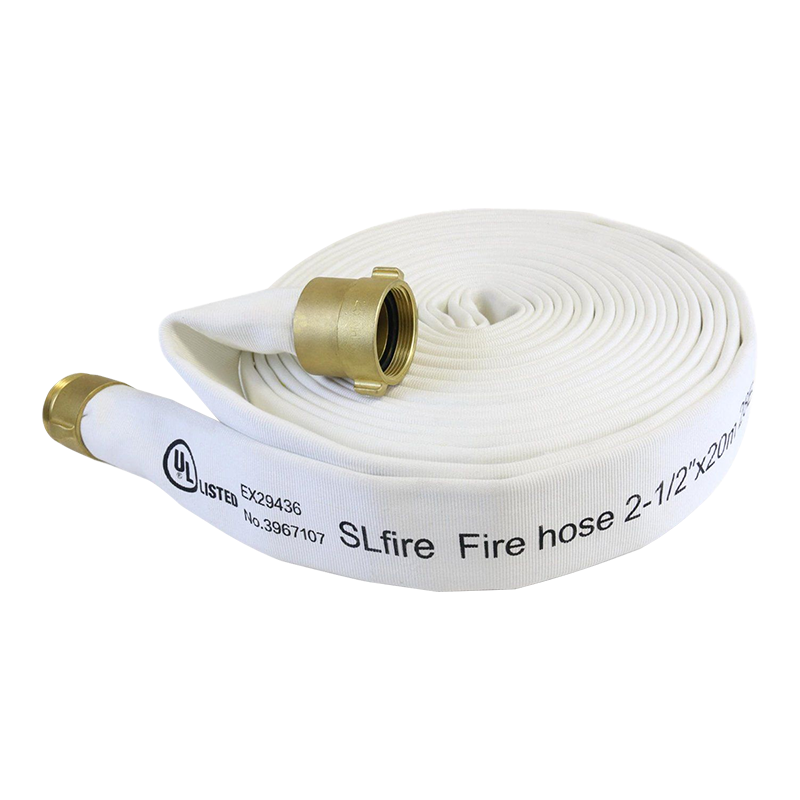
Single jacket, EPDM rubber liner Features • 100% high tenacity polyester jacket, high-grade EPDM rub...
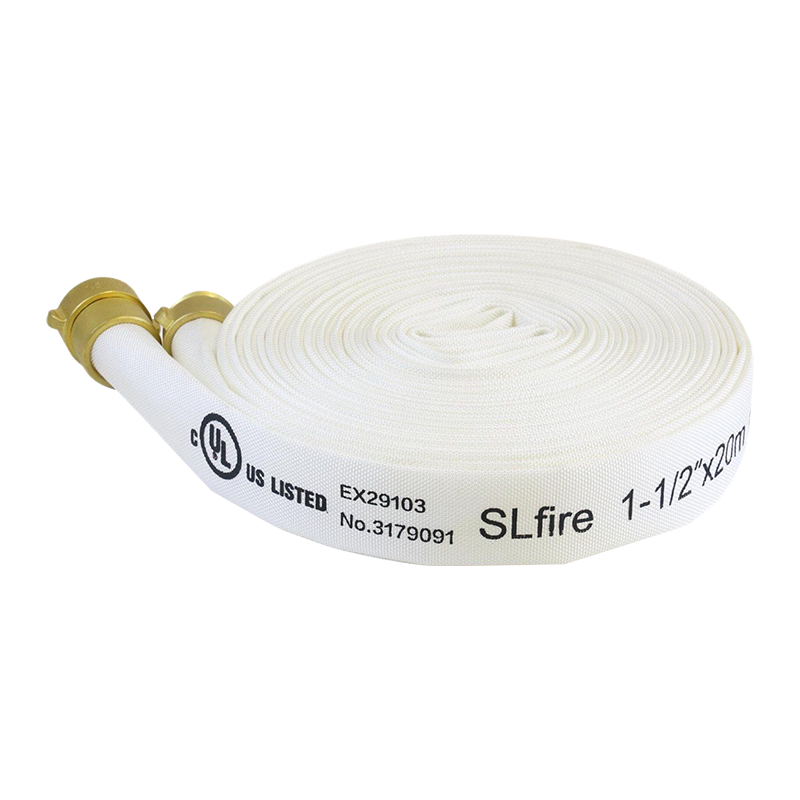
Single jacket, TPU liner •High-tenacity polyester yarn, circular woven in twill weave/plain weave,T ...
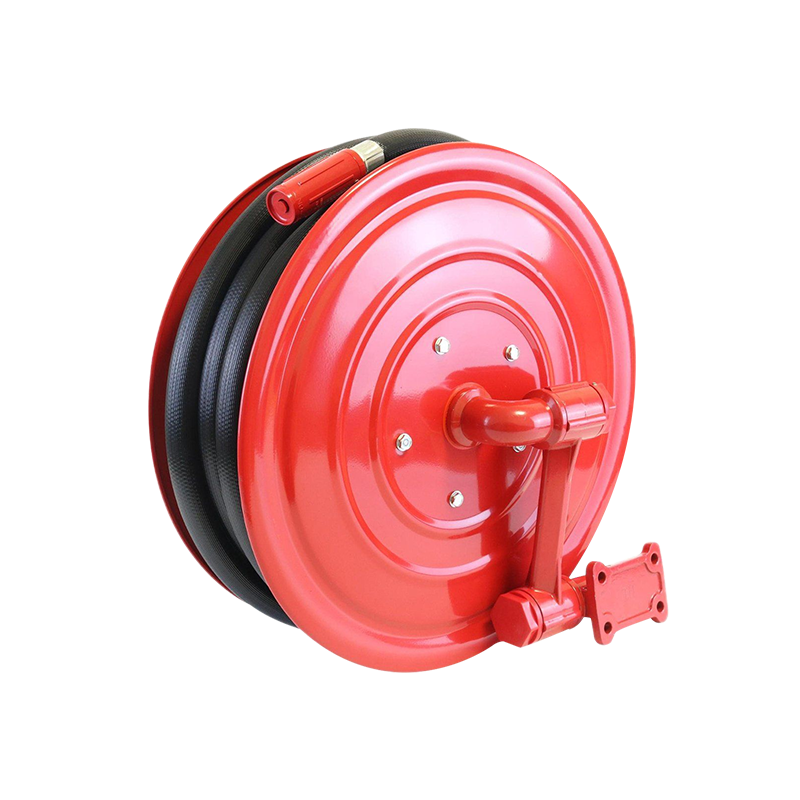
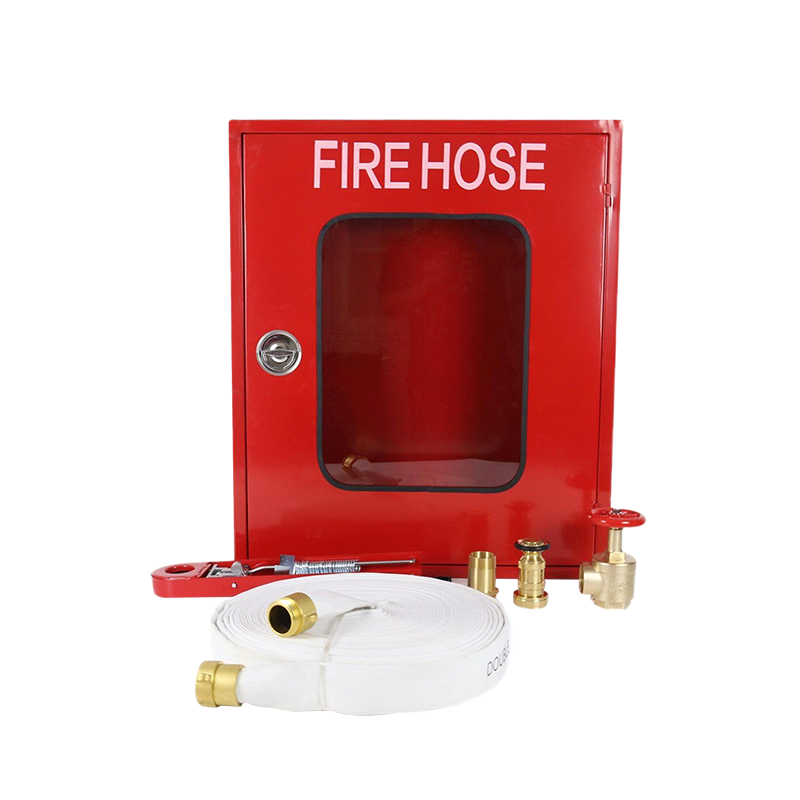
Fire cabinets are designed to accommodate fire hose,valve and other firefighting equipment. Type 201...
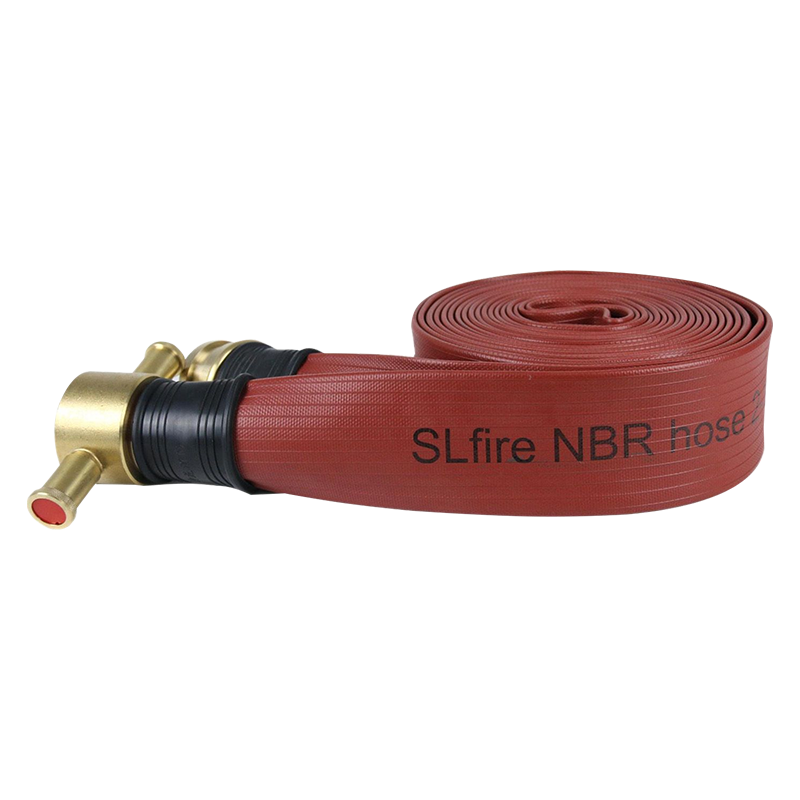
Nitrile covered hose •Nitrile/TPR blend as cover and lining, with 100% high-tenacity polyester yarn ...
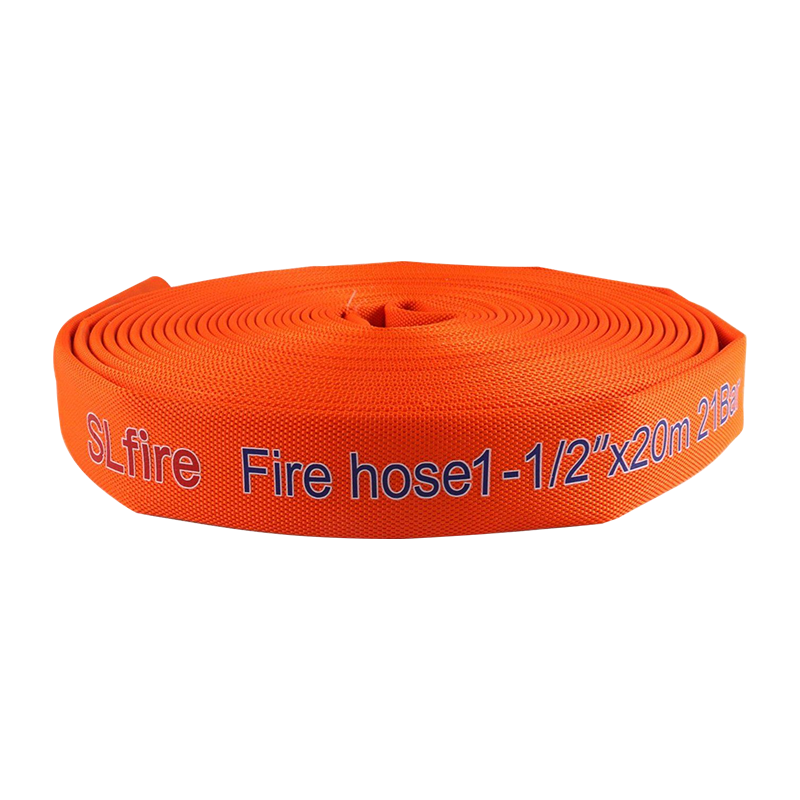
Single jacket, TPU liner •High-tenacity polyester yarn, circular woven in twill weave, TPU lining, f...
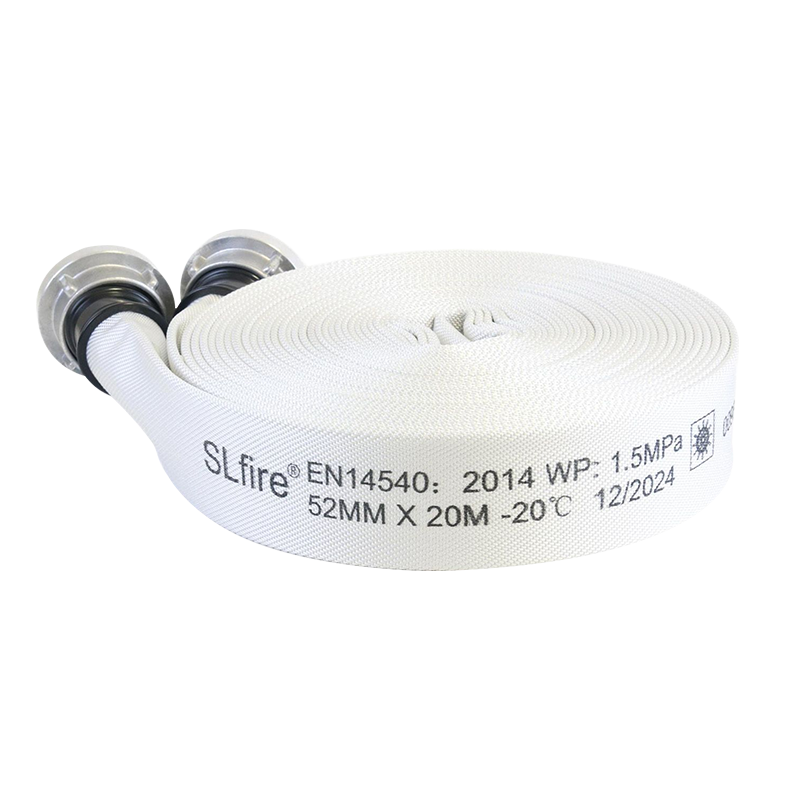
Marine hose Single jacket, PVC liner •100% high tenacity polyester yarn, circular woven in twill wea...
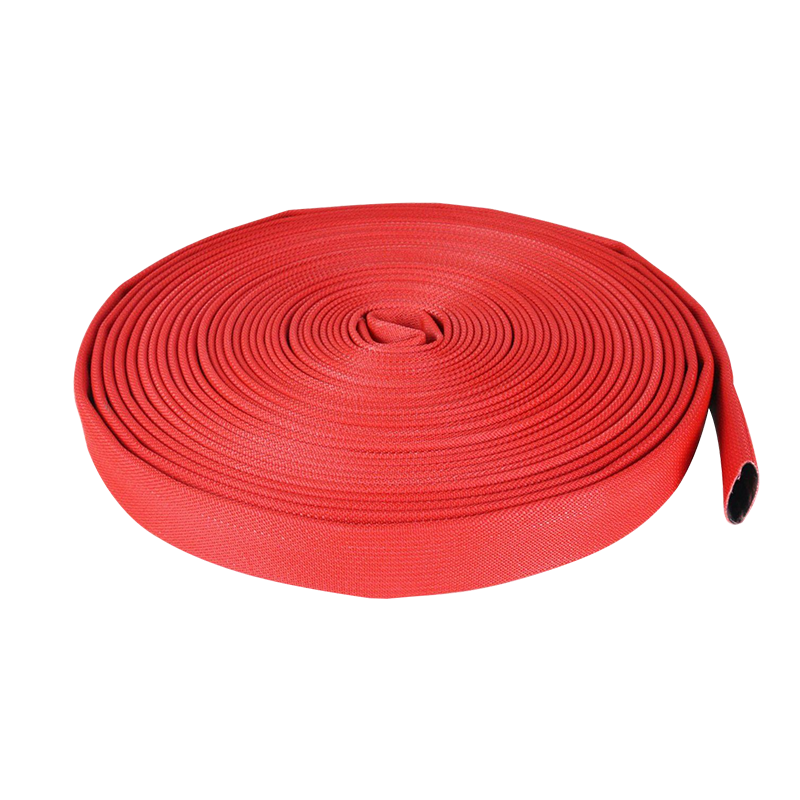
Marine hose Single jacket, PVC liner, PU coated •100% high tenacity polyester yarn,c ircular woven i...
 Call Us
+86 159-5116-9511
Need Support
Head Office
No.58, Kechuang Road, Sixiang Street Medicine Gaoxin District Taizhou City, Jiangsu Province

During a routine service test, a 200-foot attack line fails at 150 psi. The outer jacket looks fine. The problem is inside: a small delamination in the liner has pinched the bore and reduced the flow...
Copyright © Taizhou Shenlong Fire Science and Technology Co., Ltd. All Rights Reserved.
 Fire Hose Manufacturers, Fire Hydrant Hose Factory